#1 Overall Winner
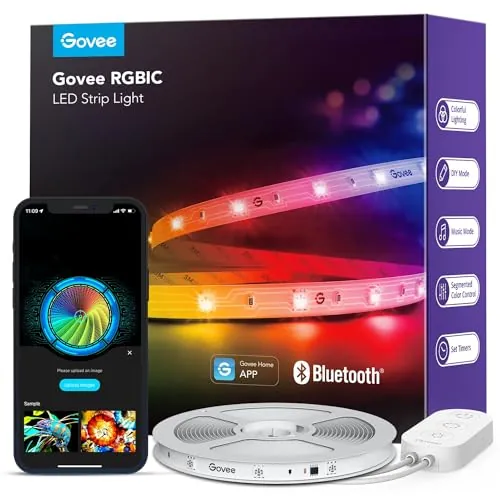
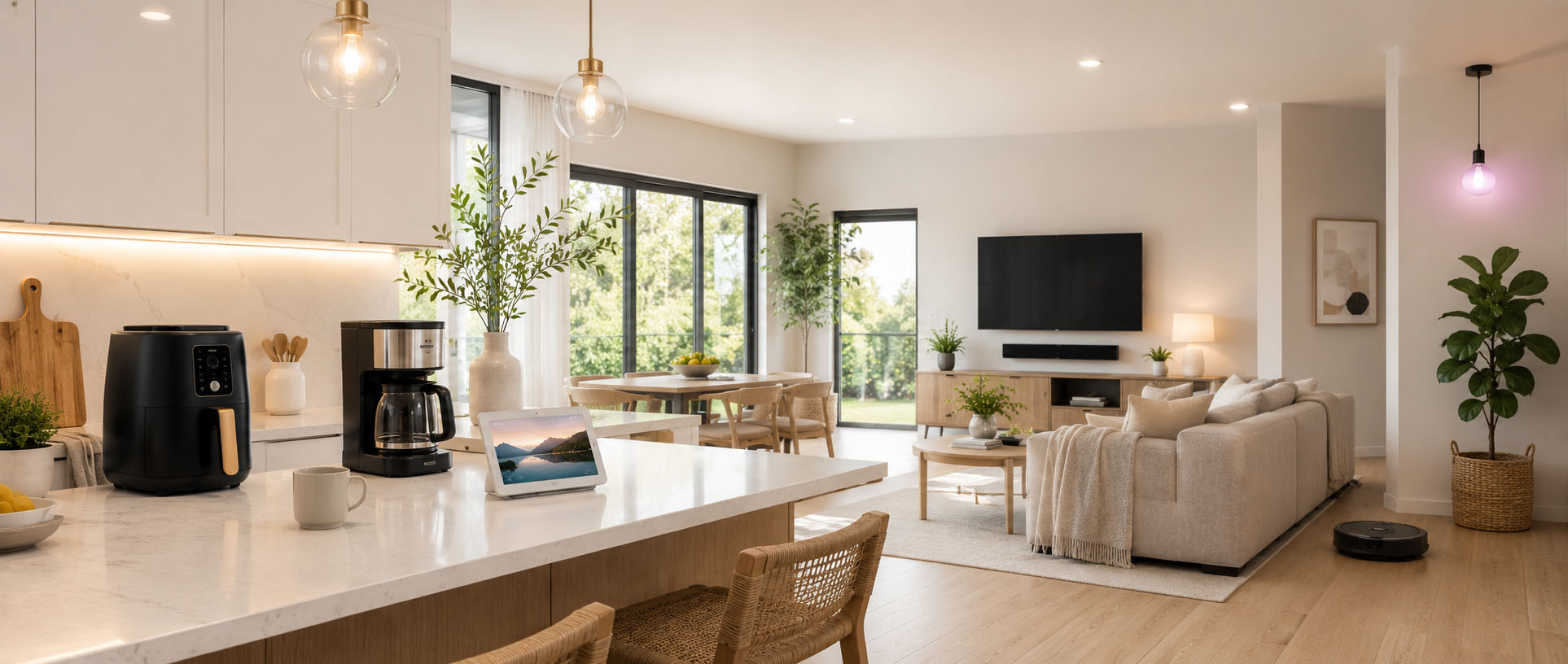
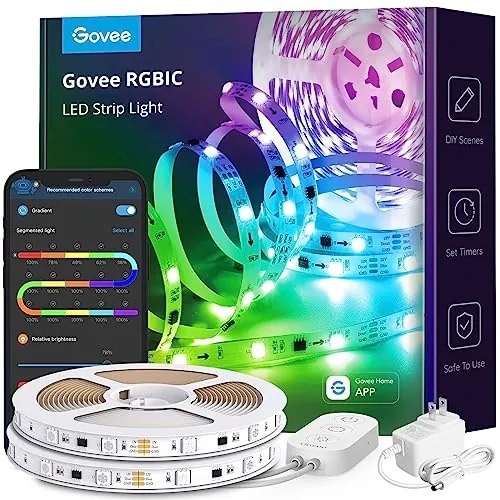
Govee 32.8ft LED Strip Lights RGBIC App Control (H6126)
- RGBIC segmented color control allows multiple colors on the strip at once.
Comparison
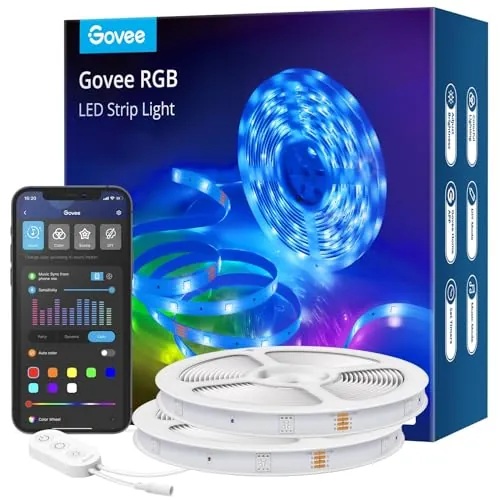
The Govee H6126 and Govee H6110 are both 32.8ft indoor LED strip light kits built around the Govee Home app, timers, and music sync. The key difference is that the H6126 uses RGBIC segmented control for multicolor effects on a single strip, while the H6110 focuses on Wi‑Fi plus Alexa/Google Assistant voice control. Your best pick depends on whether you prioritize lighting effects or smart-home convenience.
#1 Overall Winner
Contender
Pick the Govee H6126 if you care most about RGBIC multicolor effects, segmented control, and animated looks for bedrooms or media setups. Pick the Govee H6110 if you want Wi‑Fi plus Alexa/Google Assistant voice control for easier daily use and routines. Both are bright indoor strips with music sync, but reliability and adhesive results can vary, so installation care matters.
Overall winner
Depends on your needs
| Feature | Govee 32.8ft LED Strip Lights RGBIC App Control (H6126) | Govee Smart RGB LED Strip Lights 32.8ft WiFi (H6110) | Winner |
|---|---|---|---|
| Type / main focus | RGBIC segmented multicolor effects | Smart RGB strip with Wi‑Fi + voice control | Depends |
| Total length in kit | 32.8ft (2×16.4ft) | 32.8ft (2×16.4ft) | Tie |
| LED count | 300 LEDs | 300 LEDs | Tie |
| Multicolor on one strip at once | Yes (RGBIC) | Not stated (RGB) | Govee 32.8ft LED Strip Lights RGBIC App Control (H6126) |
| Segment control | 15 segments per strip (stated) | Not stated | Govee 32.8ft LED Strip Lights RGBIC App Control (H6126) |
| Voice assistant support | Not stated; reviewer notes no Alexa/Google | Alexa + Google Assistant (stated) | Govee Smart RGB LED Strip Lights 32.8ft WiFi (H6110) |
| Connectivity | Bluetooth | Wi‑Fi (and Bluetooth listed) | Govee Smart RGB LED Strip Lights 32.8ft WiFi (H6110) |
| App controls | Govee Home app + buttons | Govee Home app + buttons + voice | Govee Smart RGB LED Strip Lights 32.8ft WiFi (H6110) |
| Music sync | Yes (stated) | Yes (built-in mic stated) | Tie |
| Cut-to-length flexibility | Uncuttable (stated) | Cutting mentioned by a reviewer | Govee Smart RGB LED Strip Lights 32.8ft WiFi (H6110) |
| Water resistance / outdoor use | Not water resistant; indoor | Not water resistant; indoor | Tie |
| Adhesive / mounting support | Adhesive; clips recommended near bends (stated) | Adhesive + 5 support clips (stated) | Govee Smart RGB LED Strip Lights 32.8ft WiFi (H6110) |
| Reliability (based on feedback) | Some DOA reports; many long-term positive reviews | More reports of section failures/stop-working | Govee 32.8ft LED Strip Lights RGBIC App Control (H6126) |
| Price (as provided) | $24.03 | $22.99 | Govee Smart RGB LED Strip Lights 32.8ft WiFi (H6110) |
For everyday home use, both kits work well as low-effort accent lighting—behind a TV, around a ceiling line, under furniture, or along shelving. The H6110 tends to fit homes where lighting is part of routines (voice on/off, quick dimming, scheduled scenes), while the H6126 fits homes that want lighting as décor (gradients, segmented patterns, and more dynamic visuals). In either case, plan your route before sticking the strip down, because sharp bends and re-positioning can stress connectors and reduce adhesive hold.
Both can work for indoor kitchen accent lighting such as under-cabinet glow or toe-kick lighting, and buyers specifically mention kitchen setups with the H6110. If you want quick, hands-free control while cooking, the H6110’s voice control is the practical advantage. If you want more decorative multicolor scenes (for entertaining or themed looks), the H6126’s RGBIC segment effects are the stronger match—just note it’s uncuttable, which can make clean cabinet runs harder if you need exact lengths.
Neither product changes room temperature or air quality, but both can affect “room feel” through brightness, color, and scheduling. The H6126 is better suited to creating dynamic ambience (gradients and animated scenes), while the H6110 leans toward convenience (voice commands, Wi‑Fi control) for quick lighting changes. If you’re using strips as softer evening lighting, pay attention to brightness range in practice—some users find very low settings still quite bright on the H6126.
Both strips are described as bright and visually impactful for indoor accent lighting, with many reviews praising color vibrancy and overall look. The H6126 tends to stand out on “lighting performance” because RGBIC segment control enables more complex gradients and animated effects that standard RGB strips can’t replicate. The H6110 performs well for typical room lighting and décor, but feedback is more mixed on color accuracy (especially whites) and longer-term performance, including reports of sections failing. For pure visual effects and variety, the H6126 has the advantage; for straightforward smart RGB lighting, the H6110 is usually enough.
Reliability is mixed for both kits, but the pattern differs. The H6126 has some reports of units not working and occasional packaging/missing-part issues, yet several reviewers describe years of frequent use without problems. The H6110 has more explicit reports of strips or sections failing after months, and the aggregated feedback also notes cases where the lights completely stop working. With either model, gentle installation (avoiding sharp bends and protecting joints) and testing before mounting can reduce the risk of early failure.
Both are indoor, corded LED strip kits that should be installed carefully to reduce common risks: loose adhesion (strips falling), stressed connections (intermittent operation), and overheating from improper placement. The listings emphasize cleaning the surface and using support clips near bends/turns, which helps prevent peeling and strain on joints. Neither strip is water resistant, so avoid sinks, wet counters, or steamy areas where moisture could reach the strip or power components. If you plan to use flashing or rapidly changing modes, be mindful of household sensitivities; both offer steady lighting options as well.
For comfort and ambience, the H6126 is better if you want the lighting itself to be a focal point—gradients, multi-color segments, and animated scenes that can shift the mood of a room. The H6110 is better if comfort means convenience: being able to dim, change color, or turn lights off by voice when you’re in bed or busy in the kitchen. Comfort will also depend on brightness control; some users find extremely low settings still bright on the H6126, which may matter for sleep-oriented setups.
The H6110 is generally the easier “set it and forget it” option because Wi‑Fi and voice control reduce the need to open the app, and many reviewers describe quick setup and assistant linking. The H6126 is also described as easy to install and control, but Bluetooth pairing can be less convenient across a home and some users call out connection annoyances. Both benefit from testing the strip before fully mounting it and cleaning the surface for better adhesive results.
Design differences are mostly about control and layout. The H6126 design is centered on segmented RGBIC effects and app-driven customization, with basic on-cord buttons for simple control. The H6110 design emphasizes smart-home use: Wi‑Fi plus voice assistants and a kit approach that includes support clips (stated) for reinforcement. Both are flexible, self-adhesive strips intended to be hidden along edges, but you’ll want to plan placement around power and around corners to avoid stressing connectors.
Both are space-efficient because they mount along edges and can be hidden behind furniture or trim, using little to no usable floor or counter space. Each kit offers long coverage, which helps in larger rooms or for wrapping multiple features (desk + shelves, or bed + ceiling line). The main space planning factor is cable and controller placement near power. If you need very precise lengths to avoid bunching extra strip, the H6126 being uncuttable can reduce space “tidiness” in some installs.
Neither strip uses a fan or moving parts, so operating noise is not a practical concern in normal use. The only potential sound-related factor is music-sync behavior relying on microphones, but that does not typically create audible noise from the device itself. Both are suitable for bedrooms and quiet spaces from a noise standpoint.
Installation is similar—clean and dry the surface, plan your route, and avoid stressing corners. The H6110 kit explicitly includes support clips and is frequently described as straightforward to set up and integrate with Wi‑Fi and voice assistants. The H6126 is also commonly described as easy to install, but it’s listed as uncuttable, so it can be harder to get a perfectly tailored run in tight layouts. For either, it’s wise to power on and test all LEDs before fully committing the adhesive.
Both strips use plastic components and adhesive-backed flexible lighting, and both can be damaged by sharp bends or stressed joints during installation. Feedback for the H6126 skews more positive on holding up over time, with multiple reviews mentioning years of daily use. The H6110 has more reports of sections failing within months for some buyers, suggesting more variability in long-term outcomes. Regardless of model, careful handling during install appears to be a key factor in avoiding early failures.
Long-term durability depends heavily on installation quality and how often the strip is stressed at corners or connectors. The H6126 has stronger long-term anecdotes in the provided reviews, including daily use over years. The H6110 has more mentions of partial strip failures over time, suggesting greater variability from unit to unit. For both, durability is likely better when the strip is installed once, reinforced at bends, and not repeatedly removed and re-stuck.
Maintenance is minimal for both: there are no filters, tanks, or moving parts. The main upkeep is keeping the strip adhered (re-pressing or reinforcing with clips) and keeping the controller and connections strain-free. App maintenance is mostly keeping your phone/app updated and re-pairing if connectivity becomes flaky. If you use music sync often, placement of the control box/mic can also matter for consistent behavior, but it doesn’t require ongoing physical maintenance.
Both are easy to move between rooms because they’re lightweight strip kits, but “portability” is limited by adhesive mounting—once removed, re-adhesion may be weaker and can stress the strip. The H6126’s Bluetooth control can be convenient for taking to a different room without reconfiguring Wi‑Fi, while the H6110’s Wi‑Fi setup may take a little more time if you move it to a different network. If you expect frequent moves, plan for extra mounting support.
Feature-wise, the H6126 focuses on advanced lighting effects: RGBIC technology, segmented control (15 segments per strip stated), scene modes, timers, music sync, and app features like photo-based color picking. The H6110 offers a strong set of “smart control” features: Wi‑Fi connectivity, Alexa/Google Assistant voice control, app DIY modes, timers, and music sync. In short, H6126 wins on visual effect sophistication, while H6110 wins on smart-home control options.
Both products use the Govee Home app and owners generally like the level of customization. The H6126 receives praise for rich effects and color control, but some users mention Bluetooth connecting/disconnecting. The H6110 app experience is often positive for setup and control, but some review feedback flags app permission handling and grouping behavior as less intuitive, plus occasional connectivity frustrations. If you value deep effect editing, H6126 stands out; if you value voice integration tied to the app, H6110 is the better match.
The H6110 is the more smart-home oriented option because it supports Wi‑Fi control and works with Alexa and Google Assistant, which makes it easier to add to voice routines and hands-free household use. The H6126 is primarily Bluetooth and app/button controlled; it can still be scheduled in the Govee Home app, but it’s not positioned as a voice-assistant device in the provided information. If smart-home integration is your main goal, the H6110 is the clearer fit.
The H6110 has the clearer smart-home advantage because it supports Alexa and Google Assistant and uses Wi‑Fi control, which typically enables easier whole-home routines (for example, turning on at sunset or syncing with bedtime commands). The H6126 supports scheduling in the Govee Home app, but its Bluetooth control and limited physical buttons make it more of a “local control” product. If you want automation that doesn’t depend on being near the strip, the H6110 is the more suitable choice.
Both can use timers and schedules in the Govee app, but the H6110 is more automation-friendly in day-to-day life because it works with Alexa and Google Assistant for routines and voice triggers. The H6126 can still be automated indirectly (for example, by using a smart plug for power control, as a reviewer noted), but that approach is less flexible than native Wi‑Fi/assistant control.
Connectivity is the biggest practical difference. The H6126 is Bluetooth, which can work well in a single room but may be less reliable at distance and is more dependent on your phone being nearby. The H6110 is Wi‑Fi-based (with Bluetooth also listed), and multiple reviews describe it connecting quickly and integrating with Alexa/Google, though other buyers report connectivity problems. If you want control from anywhere in the home (or remotely via a smart assistant ecosystem), Wi‑Fi on the H6110 is a meaningful advantage.
Both are LED-based strips designed for efficient accent lighting compared with traditional bulbs, and both list the same wattage. Real-world efficiency will depend on brightness level, selected effects, and how long they run each day. If you plan to leave strips on for long periods, using schedules and dimming can help reduce unnecessary runtime. The H6126’s effects-heavy usage may encourage brighter, more dynamic modes, while the H6110’s voice/routine control can make it easier to turn off consistently.
Privacy considerations are more relevant to the H6110 because it uses Wi‑Fi and voice-assistant integration, which typically involves account linking and networked control. A reviewer also mentions app permission handling around camera-based color recognition, which may matter if you prefer to restrict permissions. The H6126 is Bluetooth-based, which can reduce network exposure but still relies on the Govee Home app. If privacy is a priority, review app permissions and only enable features you actually use.
Both strips are priced similarly and both get strong buyer feedback for brightness and overall look, so value largely depends on which feature set you’ll actually use. The H6126 can offer better value for décor-focused buyers because RGBIC segmented effects can replace the need for multiple strips to get gradient looks. The H6110 can be better value for smart-home households because voice control and Wi‑Fi make daily operation easier and can reduce “friction” using the lights. However, the H6110’s more mixed long-term reliability feedback can affect value if you end up replacing a strip earlier than expected.
Both products are from Govee and use the same Govee Home app ecosystem, which several reviewers describe as a reason they keep buying the brand. Trust differences here are more product-specific than brand-wide: the H6126 receives more long-term positive anecdotes, while the H6110 has more reports of section failures. If you already use Govee devices, either will fit the same app environment; if you prioritize consistent longevity, the H6126 appears less contentious in the provided feedback.
Both products have high overall star ratings and large review counts, with recurring praise for brightness, color variety, and app control. The H6126’s satisfaction highlights tend to focus on RGBIC effects, vibrant color reproduction, and deep customization, while negatives often mention Bluetooth connectivity annoyances and mixed adhesive performance. The H6110 is frequently praised for easy setup and voice assistant integration, with common complaints around connectivity quirks, white color looking off (bluish), and reliability issues like sections failing. Satisfaction is strong for both, but expectations should be set around variability.
The better choice depends on what you want the strip to do. The Govee H6126 is the stronger pick for lighting effects: its RGBIC segmented control is built for multi-color gradients and animated scenes, and reviews frequently praise brightness, color quality, and long-term use—though Bluetooth connectivity and inconsistent adhesion are common drawbacks.
The Govee H6110 is the more practical smart-home option, offering Wi‑Fi plus Alexa/Google Assistant voice control and generally easy setup. Its main limitation is more mixed reliability feedback, including reports of sections failing and some color accuracy complaints (especially whites). If you want the most decorative output, pick H6126; if you want voice-controlled convenience, pick H6110.
Overall winner
Depends on your needs
If you want multicolor gradients and animated effects on a single strip, the H6126’s RGBIC segmented control is the standout. If you care more about smart-home convenience, the H6110 is better suited thanks to Wi‑Fi plus Alexa/Google Assistant voice control. Both use the Govee Home app and offer music sync, but they prioritize different strengths.
No. The H6110 is designed to work with Alexa and Google Assistant for voice control. The H6126 is primarily app and button controlled via Bluetooth; review feedback specifically notes the lack of Alexa/Google control. If hands-free voice commands matter, the H6110 is the safer pick based on the provided information.
The H6126 is the better choice for multicolor displays because it uses RGBIC technology and supports segmented control (multiple colors at once across sections). The H6110 is described as RGB with app and voice control, but it does not claim the same RGBIC segmented multicolor behavior.
Both are generally described as easy to set up, especially when the mounting surface is clean and dry. The H6110 kit explicitly includes support clips and is often praised for straightforward setup and Wi‑Fi linking. The H6126 is also commonly reported as simple to install, but adhesive results are more mixed and it’s listed as uncuttable, which can complicate tidy layouts.
Neither model is listed as waterproof; both are described for indoor use and have “not water resistant” specified. If you need outdoor lighting (even under exposure risk), these are not positioned for that purpose based on the provided specifications.
Buyer feedback is mixed on both, but the H6110 has more explicit reports of sections failing or strips stopping working over time. The H6126 also has some reports of units not working, yet multiple reviews describe years of daily use without issues. For either model, careful installation (avoiding sharp bends and stressing joints) appears important.
The H6126 is stated as uncuttable, so you’ll want to measure carefully before buying. For the H6110, at least one reviewer reports cutting it to the needed length, but cutting capability can depend on the exact strip design and where cut points exist. If precise sizing is essential, confirm the exact cutting guidance for the unit you’re purchasing.
The H6110 is generally better for smart-home routines because it supports Wi‑Fi control and voice assistants, which typically makes integration with household habits easier. The H6126 can still be scheduled in the Govee app, but Bluetooth control and limited physical buttons can make whole-home automation less seamless compared with Wi‑Fi-based control.
For the H6126, complaints tend to focus on Bluetooth/app connectivity issues and inconsistent adhesive performance, plus occasional reports of not working or packaging/missing parts. For the H6110, negative feedback more often mentions connectivity issues, color accuracy concerns (notably white looking bluish), and reliability problems like sections failing after months of use.
Check our rankings and expert guides to find the best home lifestyle products for your goals.