
#1 Overall Winner
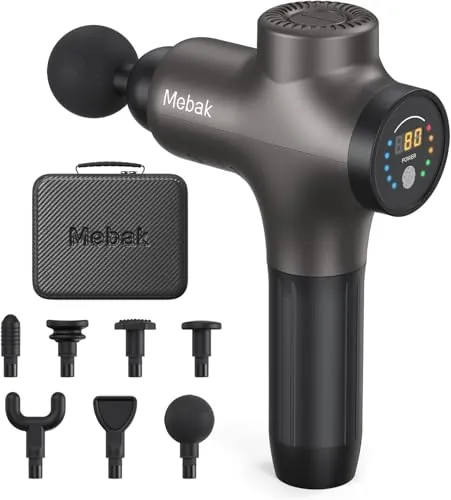
Mebak 3 Massage Gun
- Strong deep-tissue capability with 12mm amplitude and high stated stall force for working into tight areas.
Comparison
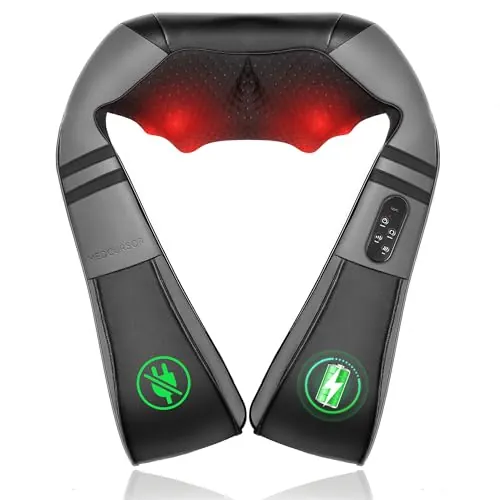
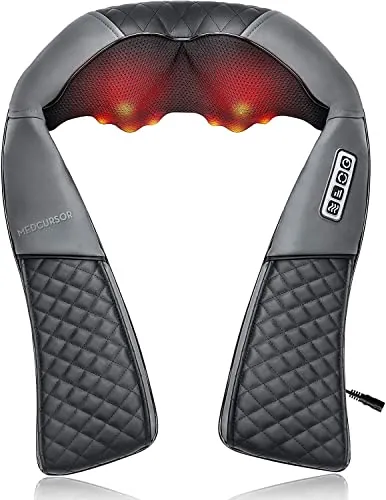
The Mebak 3 Massage Gun and Medcursor Neck Massager both aim to relieve muscle soreness, but they do it in different ways: cordless percussion vs corded shiatsu kneading with optional heat. Mebak is better suited to targeted, on-the-go recovery with multiple attachment heads, while Medcursor is more of a plug-in home (or car) comfort device for neck and shoulder routines.
#1 Overall Winner
Contender
Choose the Mebak 3 Massage Gun if you want cordless portability, multiple heads, and more targeted trigger-point work across the whole body. Choose the Medcursor Neck Massager if you prefer shiatsu kneading with optional heat and a simple, plug-in routine for neck and shoulder tension—especially at home or in the car.
Overall winner
Depends on your needs
| Feature | Mebak 3 Massage Gun | Medcursor Neck Massager | Winner |
|---|---|---|---|
| Type of massage | Percussion massage gun | Shiatsu kneading pillow massager | Depends |
| Power source | Battery powered (cordless) | Corded electric (not cordless) | Mebak 3 Massage Gun |
| Heat function | Not listed | Heat on/off | Medcursor Neck Massager |
| Speed settings | 5 speed levels (950–3000 RPM listed) | 3 speed levels | Mebak 3 Massage Gun |
| Attachments / nodes | 7 interchangeable heads | 8 bi-directional kneading nodes | Depends |
| Pressure guidance | LED pressure sensor indicator | Adjust pressure via handle straps | Depends |
| Portability | Compact with carrying case; 1.68 lb device weight listed | Portable but corded; 2 lb listed | Mebak 3 Massage Gun |
| Noise expectations | 39–50 dB listed | Often described as quiet in reviews | Mebak 3 Massage Gun |
| Comfort for sensitive areas | Depends on head/pressure; can be intense | Mixed comfort; can feel painful/bruise for some | Depends |
| Safety features | Pressure indicator; no auto shutoff listed | 15-minute auto shutoff + overheat protection | Medcursor Neck Massager |
| Maintenance/cleaning | Wipe down device and heads; keep dry | PU leather/mesh described as easy to clean | Tie |
| Best fit for car use | Cordless (no car adapter listed) | Car adapter included | Medcursor Neck Massager |
| Reported reliability pattern | Mostly positive, but some battery/charging failures mentioned | Generally positive; heat complaints are common | Medcursor Neck Massager |
| Customer sentiment (reviews) | Very high star rating with very large review volume | High star rating with large review volume | Mebak 3 Massage Gun |
For everyday home use, the Medcursor tends to be the “set it up on the sofa/bed and relax” option, particularly for neck and shoulder tension after work or long drives. The Mebak 3 is more flexible around the house because it’s cordless and can be used quickly on calves, hamstrings, or back tightness without needing a nearby outlet. If you want one device that multiple family members can use in different rooms, Mebak’s portability helps; if your routine is mainly seated neck/back sessions, Medcursor fits naturally.
Both products fall into the comfort category, but they deliver comfort differently. Mebak focuses on percussion therapy and is often used for post-workout recovery and general muscle tightness, with comfort depending on choosing the right head and not over-pressing. Medcursor adds an optional heat mode and timed shutoff, which can suit evening wind-down routines, though several reviews note the heat can be subtle. If warmth is a key part of relaxation for you, Medcursor is the only one of the two that offers it.
In terms of core massage performance, both products are commonly described as effective for pain relief and loosening tight muscles. The Mebak 3 stands out for targeted deep-tissue work thanks to its percussion action, multiple heads, and pressure indicator that helps control intensity on sensitive areas. The Medcursor performs well for neck/upper back tension by delivering consistent kneading with automatic direction changes, but results depend more on fit and how you position and pull the straps. If you want “spot treatment,” Mebak is typically the more precise tool; if you want kneading across the traps and shoulders, Medcursor can feel more like a hands-on massage.
Reliability is where the two separate a bit in the provided feedback. The Mebak 3 has many long-term positive reports, but there are repeated mentions of charging/battery failures and units stopping, which lowers confidence for heavy, frequent users. Medcursor’s negative feedback in the provided reviews leans more toward feature disappointment (especially heat) and comfort intensity rather than the device not working, and it benefits from being corded (no battery degradation to manage). If you want to reduce battery-related risk, Medcursor is the safer bet; if you accept some charging risk for portability, Mebak is appealing.
Both products should be used thoughtfully, especially for deep tissue work. With the Mebak 3, reviewers note it can be powerful enough to cause harm if you press too hard or use the wrong attachment on sensitive areas; the pressure indicator may help users moderate force, but it’s still a hands-on tool. Medcursor lists safety features like overheat protection and a 15-minute auto shutoff, which can reduce the risk of prolonged use. Comfort-related feedback (bruising or “too intense”) suggests starting on lower settings and easing into pressure is sensible for either device.
Comfort is one of the biggest differences. Mebak comfort tends to hinge on user technique—using the right head and moderate pressure—while still offering strong relief when used carefully. Medcursor can feel very satisfying for people who like deep kneading, but reviews also mention that it can feel too intense or even bruise when used aggressively, and some users don’t perceive much heat. If you’re sensitive or new to deep tissue massage, starting gently matters with either option.
The Medcursor is generally easier for beginners because you don’t need to pick attachments—set a speed, place it on the area, and use the straps to control pressure. The Mebak 3 is still straightforward, but it asks more of the user: choosing a head, keeping a steady angle, and managing pressure (helped by the indicator). For self-massage hard-to-reach areas, Medcursor can be simpler if it fits your body well, while Mebak may require more hand positioning.
Mebak’s gun-style design is compact and purpose-built for moving around the body, and its carry case helps keep the heads organised. Some users mention the handle can feel large, which can matter for smaller hands during longer sessions. Medcursor’s pillow-style design is bulkier but ergonomic for neck/shoulder use, and the strap handles make it easier to pull into the right position. The trade-off is reliance on a power cord and having enough space to sit or recline comfortably while using it.
These products don’t have “capacity” in the same way a vacuum or air fryer does, but their practical coverage differs. The Mebak 3 is designed for whole-body use and comes with multiple heads to adapt contact points. The Medcursor is optimised around neck/shoulder/back placement and can be moved to other body areas, but its physical shape means it works best where it can press evenly and securely.
For storage and small-space living, Mebak is easier to tuck away thanks to its compact form and case, even though it includes multiple heads. Medcursor takes more drawer or shelf space due to the pillow shape and long cord, and it’s more likely to live in a bedside or living-room spot. If you have limited storage or prefer a device you can pack away neatly, Mebak fits better.
Mebak is positioned as a quiet massage gun and lists a low operating noise range, which fits shared households and evening use. Medcursor is also frequently described as quiet enough for TV time, though noise perception can vary depending on pressure and surface contact. If noise is a top priority, Mebak has the clearer supporting detail in the provided data.
Both products get positive “well made” comments, but neither is free from concerns. Mebak is often described as solid with a good grip and a sturdy case, though there are reports of failures and charging/battery issues that can affect confidence over time. Medcursor uses PU leather and breathable mesh and is described as durable by many reviewers, with the main cautions being comfort/pressure and avoiding excessive force that could wear the mechanism.
Both products have signs of lasting well for many owners, but with different weak points. Mebak’s durability concerns concentrate around battery/charging and occasional early failure reports, even though some buyers report years of use. Medcursor’s durability is more tied to mechanical wear from pressing too hard over time, as some reviewers advise not to overload the kneading mechanism. For long-term use, gentler technique and reasonable session length help both devices.
Maintenance is simple for both: keep them dry, wipe down surfaces, and store them neatly. Mebak maintenance includes keeping track of multiple heads and charging the unit (and supplying your own suitable adapter). Medcursor is described as easy to clean thanks to PU leather/mesh, and you don’t need to manage a battery, but you do need to manage the cord and store the pillow unit somewhere accessible. Neither is designed for water exposure.
Portability strongly favours the Mebak 3. It’s cordless, lighter in-hand, and comes with a dedicated carrying case that makes it easy to take to the gym, office, or competitions. Medcursor is “portable” in the sense that you can bring it with you and it includes a car adapter, but being corded and pillow-shaped makes it less convenient for travel and quick use away from outlets.
Mebak’s feature set is built around versatility: 7 attachment heads, 5 speeds, cordless use, and an LED pressure sensor indicator. Medcursor’s features focus on a guided, at-home routine: kneading nodes that change direction automatically, 3 speeds, optional heat, plus safety features like overheat protection and a 15-minute auto shutoff. Medcursor also includes both a wall and car adapter with a long cord, while Mebak includes a carrying case but not a power adapter.
Neither listing provides energy-use data, so efficiency is mostly about how quickly and conveniently they deliver relief. Mebak can be efficient for quick sessions because it’s cordless and easy to grab, but charging reliability is a recurring theme in a small subset of reviews. Medcursor avoids battery concerns because it’s corded and includes adapters, which can make it dependable for frequent home sessions; however, you are limited to places where you can plug it in.
Value depends on what you need most. Medcursor is significantly cheaper and includes heat, auto shutoff, and both wall and car adapters, making it a strong-value home kneading device if you can live with the cord and potentially subtle heat. Mebak costs more but adds a full accessory set, cordless convenience, a carry case, and strong satisfaction around performance and portability. If this will be used for workouts, travel, and multiple muscle groups, Mebak can justify the higher price; if you mainly want affordable neck/shoulder relief on the sofa, Medcursor is hard to ignore.
Based on the provided data, both brands have substantial buyer feedback and generally positive sentiment, but neither comes with detailed support or warranty terms here. Mebak has at least one review describing an easy warranty replacement process, though that same user raised concerns about repeat issues. Medcursor is praised for the product concept and includes a UL-listed adapter claim in the listing, but warranty/support experiences are not clearly detailed in the provided reviews.
Both products earn strong overall ratings with very large review counts, suggesting broad buyer approval. Mebak’s feedback is especially consistent around strong relief, useful attachments, quiet use, and value, with a smaller but notable theme of charging/battery failures. Medcursor’s reviews frequently praise pain relief and ease of use, but are more divided on comfort and heat—some call it a game changer, while others say the heat is weak or the kneading can be too intense. If you want more consistently positive sentiment, Mebak has the edge; if you’re comfortable with mixed opinions on heat/comfort, Medcursor still reviews well.
Warranty and support details are limited in the provided data. For Mebak, at least one reviewer reports using the warranty with an easy replacement process, though they later worried about longevity. For Medcursor, the listing and reviews do not provide clear, repeatable details about warranty handling, so it’s worth checking the seller’s current warranty terms before purchase.
The Mebak 3 Massage Gun is the clearer all-rounder: it’s cordless, quiet, and adaptable thanks to multiple heads and a pressure indicator, making it useful for whole-body recovery. Its main limitation is mixed reliability feedback, particularly around charging or units stopping for some buyers.
The Medcursor Neck Massager is a strong pick for at-home neck and shoulder relief with a kneading feel, plus safety features like auto shutoff and overheat protection. Its main drawbacks are inconsistent heat feedback and comfort that can be too intense depending on how you use the straps. If you want portability and versatility, go Mebak; if you want plug-in kneading comfort on a budget, Medcursor is the better fit.
Overall winner
Depends on your needs
If you want targeted work on specific knots, the Mebak 3’s percussion style, multiple heads, and pressure indicator are better suited to “spot treatment.” The Medcursor focuses more on kneading for the neck/back area and relies on positioning and strap pressure. For broad, hands-like kneading on shoulders, Medcursor can feel more natural.
The Mebak 3 is the more portable option because it’s cordless, lighter, and comes with a compact carrying case. The Medcursor is designed more for plug-in use at home or in the car, since it’s not cordless and is bulkier in a pillow-style format.
Reviews are mixed. Some buyers say the heat noticeably helps loosen tight muscles, while others report they barely feel it and consider it weak. It also has guidance to preheat for several minutes and then restart for use, which suggests it may take time to feel the warmth depending on conditions.
Both are often described as usable in shared spaces, but the Mebak 3 explicitly lists a low noise range and is frequently praised for being quiet for a massage gun. The Medcursor also gets “quiet” mentions in reviews, though perceived noise can vary depending on pressure and where it’s used.
The Medcursor tends to be simpler day-to-day because you mainly choose a speed and adjust pressure with the straps, and it automatically changes direction. The Mebak 3 can be very straightforward too, but getting the most from it may involve picking the right head and being mindful of how much pressure you apply.
Many owners report good performance and long-lasting use, but there are also reviews describing units that stopped working or developed charging/battery issues. That pattern doesn’t mean every unit will have problems, but it’s a practical risk to consider—especially if you plan frequent use.
Several reviewers use it beyond the neck—on the lower back, calves, glutes, hands, and feet—by repositioning the pillow and adjusting the strap pressure. Results depend on body shape and placement, but it’s commonly described as flexible enough for multiple areas as long as you avoid pressing hard on bony spots.
The Medcursor is less expensive and includes heat, auto shutoff, and both car and wall adapters, which can be strong value if you mainly want at-home kneading. The Mebak 3 costs more but includes a carry case, multiple heads, and cordless portability, which can justify the price for workouts, travel, or more targeted muscle work.
Check our rankings and expert guides to find the best home lifestyle products for your goals.