#1 Overall Winner
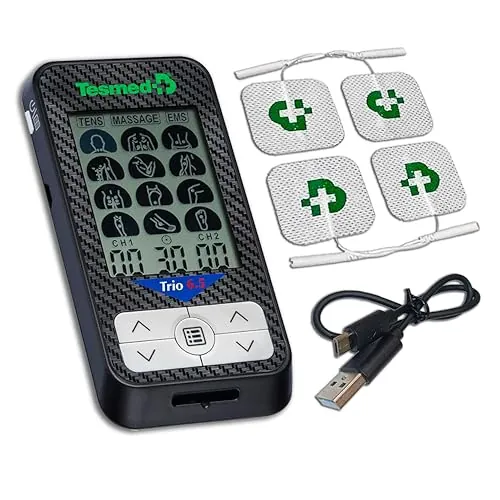
TESMED Trio 6.5
- Wide choice of stimulation options with EMS, TENS, and massage modes
Comparison
TESMED Trio 6.5 and the TheraFlow Foot Roller both aim to support at-home pain relief, but they do it in very different ways. TESMED is a USB-rechargeable TENS/EMS unit with multiple programs for targeted areas, while TheraFlow is a simple manual roller designed mainly for foot and heel/arch discomfort. The better pick depends on whether you want multi-area electrotherapy-style sessions or quick, low-effort foot relief.
#1 Overall Winner
Contender
Choose the TheraFlow Foot Roller if you mainly want simple, repeatable foot relief with minimal setup and no charging. Choose the TESMED Trio 6.5 if you want a compact TENS/EMS unit for targeted sessions on areas like the back, shoulder, or legs and you’ll use the programs and intensity controls. For a single-purpose, low-fuss tool, TheraFlow is easier to live with; for broader use cases, TESMED is more versatile.
Overall winner
Depends on your needs
| Feature | TESMED Trio 6.5 | TheraFlow Foot Roller TF100 | Winner |
|---|---|---|---|
| Type | Powered TENS/EMS + massage modes | Manual wooden foot roller | Depends |
| Primary target areas | Back and multiple body areas (via pads) | Foot/heel/arch/ball of foot | Depends |
| Programs / presets | Multiple built-in programs | None (manual technique) | TESMED Trio 6.5 |
| Intensity control | Multiple intensity levels | Pressure controlled by user | Depends |
| Ease of use | More setup (pad placement, controls) | Very straightforward (place and roll) | TheraFlow Foot Roller TF100 |
| Build feel | Mixed impressions (plastics noted as cheap by some) | Sturdy wood construction praised often | TheraFlow Foot Roller TF100 |
| Noise during use | Typically silent operation | Can squeak for some users | TESMED Trio 6.5 |
| Portability | Very compact and lightweight | Portable but larger/heavier | TESMED Trio 6.5 |
| Ongoing upkeep | Electrode pads are consumables; needs charging | Minimal (wipe/keep clean) | TheraFlow Foot Roller TF100 |
| Best use context | Targeted sessions seated/lying down | Under desk, living room, seated rolling | Depends |
| Value for money (based on features and feedback) | Strong value for a multi-mode device | Excellent value as a simple tool | Depends |
| Customer sentiment (ratings/review volume) | Very positive overall | Extremely positive overall | TheraFlow Foot Roller TF100 |
In everyday home use, the main difference is routine and setup. TESMED Trio 6.5 tends to be used in dedicated sessions where you place pads, choose a program, and adjust intensity—useful if you want structured relief for different body areas. The TheraFlow Foot Roller is more “grab-and-go”: leave it by the sofa or under a desk and roll your feet for a few minutes. If you want something you’ll use without thinking, TheraFlow fits better; if you want a more configurable tool, TESMED is the more flexible option.
Both products aim to improve day-to-day comfort rather than change room conditions. TESMED Trio 6.5 focuses on localized muscle comfort through TENS/EMS stimulation, which many owners use for areas prone to tension (such as the back or shoulder). TheraFlow is more about foot comfort and relaxation after long periods of standing or walking. If your discomfort is mostly in your feet, the roller is more direct; if discomfort moves around your body, TESMED’s pad-based approach is more adaptable.
For performance, each product excels in its own lane. TESMED Trio 6.5 is designed to deliver targeted electrical stimulation with multiple programs and intensity steps, and reviews often describe real relief and surprisingly strong output for a small device. However, getting the best results can depend on correct pad placement, which some users find unclear at first.
TheraFlow’s roller performs well for foot-specific relief, particularly heel and arch soreness, with many reviews describing quick improvements when used consistently. It won’t replicate a multi-area, program-based approach, but within foot care, it’s a strong performer.
Reliability looks solid for both, with strong overall buyer ratings and large review counts. For TESMED Trio 6.5, repeated feedback highlights effective relief and a battery that can last across multiple sessions, but there are also hints that the lightweight build (and comments about cheaper plastics) may make it less reassuring for heavy, frequent use. For TheraFlow, the simple mechanical design and consistent “sturdy” feedback support good day-to-day reliability, with squeaking being the most commonly repeated functional annoyance rather than outright failure.
Both products are intended for home wellness use, but they have different safety considerations. TESMED Trio 6.5 is an electrical stimulation device, so safe use depends on following the manual and placing electrodes correctly; reviewers also mention placement guidance can take some learning. It’s also not water resistant, so it should be kept away from wet environments. TheraFlow is manual and avoids electrical risks, but pressure can be intense if you push hard, and the unit should be used on stable surfaces to prevent slipping. Neither listing provides specific certifications, so it’s sensible to follow included instructions and start gently.
Both products score well for comfort, but they deliver it differently. TESMED Trio 6.5 can feel more “therapy-session” oriented, letting you tune intensity and program style for the area you’re targeting, which can be helpful for recurring tension spots. TheraFlow is a comfort tool you can use passively while watching TV or working at a desk, and many users describe it as quickly making feet feel better after long days. Comfort preference comes down to foot-rolling pressure vs electrical stimulation.
TheraFlow is easier day to day: place it on the floor and roll your feet, adjusting intensity naturally with pressure. TESMED Trio 6.5 has more steps—connecting electrodes, placing pads correctly, picking a program, and adjusting intensity—plus reviews mention the screen can be hard to read. If you want minimal learning curve, TheraFlow is the simpler option; if you don’t mind setup for more control, TESMED offers more flexibility.
TESMED Trio 6.5 is designed for portability and discreet storage, with a compact body and a focus on button-and-screen control. Practical design concerns mainly relate to readability of the display and the complexity of pad placement for first-time users.
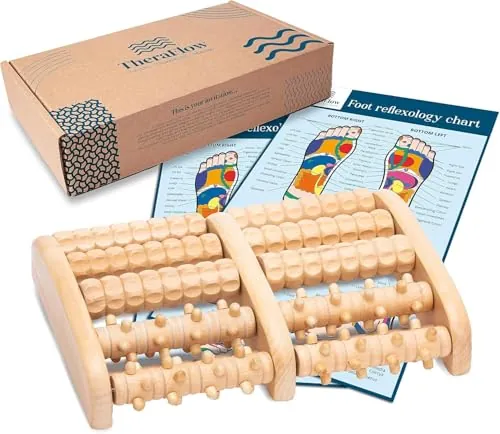
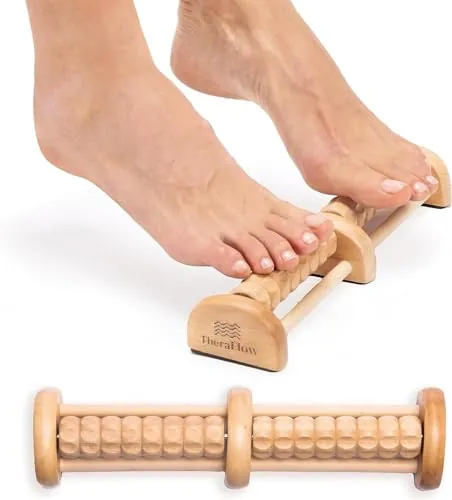
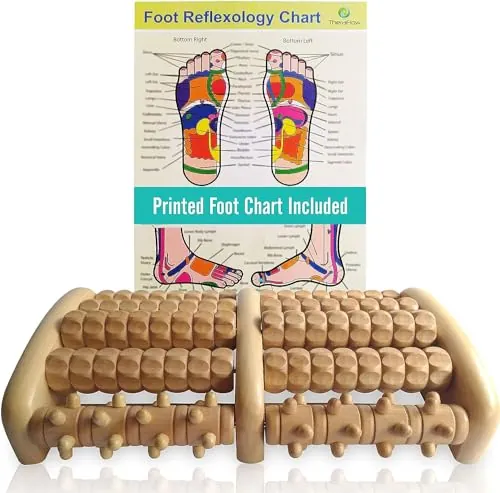
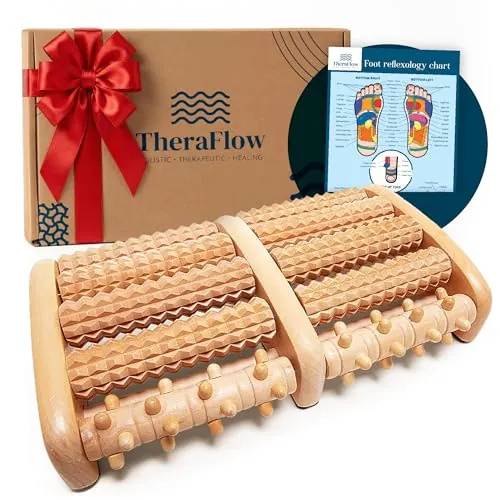
TheraFlow’s design is larger but straightforward: a stable base and textured rows meant for rolling underfoot. It fits well under a desk or in front of a sofa, though it needs floor space and works best when you’re seated.
“Capacity” means different things here. TESMED Trio 6.5 supports multiple body areas through pad placement and two channels, but the included electrode size can feel small for larger areas unless you use alternative pads. TheraFlow’s “capacity” is about usable rolling surface area, and reviews suggest it works for a range of foot sizes while still feeling compact enough for daily storage. For larger-area coverage, TESMED depends more on pad choice and placement.
Both are space-efficient, but in different settings. TESMED Trio 6.5 takes up very little drawer space and can be used without dedicating floor area, making it easy for small flats or shared bedrooms. TheraFlow needs a bit of floor space in front of a chair and is most practical where you can leave it under a desk or beside a sofa. For the smallest storage footprint, TESMED is slightly easier to tuck away.
TESMED Trio 6.5 is typically the quieter option because it doesn’t rely on moving parts during use. The TheraFlow Foot Roller is often quiet, but multiple reviewers mention squeaking, particularly when applying strong pressure. If you plan to use a massager while others are sleeping or during quiet office calls, TESMED is less likely to draw attention.
Build quality appears more consistent with the TheraFlow Foot Roller. Reviews commonly describe it as solid and sturdy, which matches a simple wood-and-roller design with few failure points. TESMED Trio 6.5 is lightweight and convenient, but multiple reviews mention plastics that feel less robust. That doesn’t mean it will fail, but it suggests handling and storage matter more if you want it to hold up over time.
TheraFlow appears more durable in typical household use because its wooden, manual construction has fewer components that can degrade. Reviews frequently call it sturdy and well-made. TESMED Trio 6.5 is compact and travel-friendly, but the more mixed build-quality feedback suggests it may benefit from gentler handling and careful storage. Also, long-term use depends partly on electrode pad longevity, which is separate from the device body itself.
TheraFlow is the lower-maintenance choice: it’s manual, doesn’t need charging, and has no pads or gels mentioned as replacements—so upkeep is mostly keeping it clean and stored properly. TESMED Trio 6.5 needs more routine maintenance, mainly keeping it charged and monitoring the condition/stickiness of the electrode pads over time. If you want a tool with minimal ongoing steps, TheraFlow is easier; if you’re comfortable managing pads and charging, TESMED is still manageable.
Both are portable, but TESMED Trio 6.5 is easier to take anywhere because it’s very small and lightweight and can be used seated with minimal space. The TheraFlow Foot Roller is still portable and relatively compact, but it’s bulkier and best used on the floor, so it’s more “portable between rooms” or “portable to the office” than “portable in a small bag.” If travel is a priority, TESMED has the advantage.
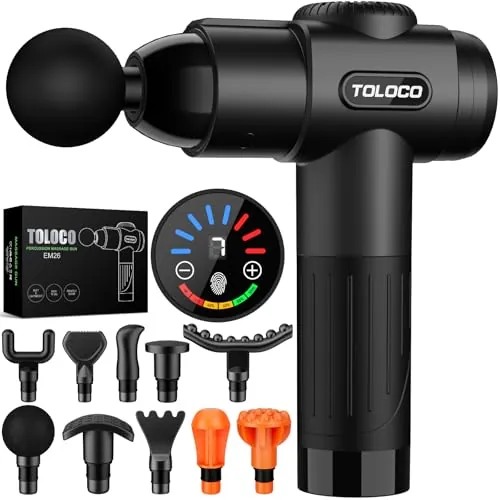
TESMED Trio 6.5 is the clear winner on features: it combines EMS, TENS, and massage-style modes, offers many built-in programs, multiple intensity steps, and two independent channels for more customized sessions. It also includes pre-gelled electrodes and a detailed manual with illustrated placement guidance (though some users still want clearer direction).
TheraFlow is intentionally simple: multiple textured rows (ridges and nubs) and a manual technique that you control. There are no powered features or presets, which is either a limitation or a benefit depending on how much complexity you want.
TheraFlow is highly efficient for quick foot relief because it has no charging downtime and no consumables mentioned in the listing—use it for a minute or ten and put it away. TESMED Trio 6.5 is also efficient in the sense that it’s rechargeable and portable, but it does require charging and ongoing attention to electrode pad condition. If you prefer a tool that’s always ready with near-zero overhead, TheraFlow has the edge.
Both products offer strong value, but for different buyers. TheraFlow is inexpensive, has extremely strong customer sentiment, and has essentially no ongoing operating costs—making it a high-value pick for foot-only relief. TESMED Trio 6.5 costs more, but it bundles multiple modes (TENS, EMS, and massage-style programs), program variety, and adjustable intensity into a compact rechargeable unit, which can be good value if you’ll use it across several body areas. If you only need feet, TheraFlow usually makes more financial sense; for broader use cases, TESMED justifies its higher price.
Both brands show strong market traction based on review volume and average ratings. TheraFlow’s product reputation in reviews is anchored in simple, consistent results and sturdy construction for foot relief. TESMED’s reputation here is tied to offering lots of programs and strong perceived relief at a budget-friendly price, with some reservations around build robustness and display readability. If brand trust for you means “simple tool, fewer things to go wrong,” TheraFlow feels more confidence-inspiring; if it means “feature-rich device with many options,” TESMED is the more capable offering.
Customer satisfaction is high for both products, supported by large review counts and strong star ratings. TESMED Trio 6.5 reviews often praise effective relief, strong intensity, and long-lasting pad stickiness, while common complaints focus on screen readability and uncertainty about electrode placement. TheraFlow’s reviews are overwhelmingly positive for plantar fasciitis-style relief, ease of use, sturdiness, and value; the most repeated negative point is squeaking during rolling. Overall sentiment is slightly more consistently positive for TheraFlow, likely because it’s simpler and more focused.
Overall winner: TheraFlow Foot Roller for most buyers seeking straightforward, dependable foot relief with minimal setup. Its biggest strength is how easy it is to use consistently, backed by very strong buyer satisfaction and a sturdy, simple build; its main limitation is that it’s foot-focused and can squeak for some users.
TESMED Trio 6.5 is the better pick when you want broader versatility: TENS/EMS programs, adjustable intensity, and targeted use on areas like the back or shoulders. Its strongest point is the range of modes and customization for the price, while its main downsides are a less premium-feeling build and a learning curve around screen readability and pad placement.
Overall winner
Depends on your needs
It depends on where you need relief and how much control you want. TESMED Trio 6.5 is better suited to targeted use on areas like the back, shoulders, or legs using electrode pads and selectable programs. The TheraFlow Foot Roller is a simpler option focused on feet (heel/arch/sole) with manual pressure control and minimal setup.
The TheraFlow Foot Roller is the more direct match for plantar fasciitis-style heel and arch discomfort because it’s designed specifically for rolling the foot over ridges and nubs. TESMED Trio 6.5 can be used for localized discomfort with TENS programs, but pad placement and setup matter more and it isn’t purpose-built as a foot-sole roller.
The TheraFlow Foot Roller is typically easier for daily use because it’s manual: you place it on the floor and roll your feet, controlling intensity by how hard you press. TESMED Trio 6.5 has more options, but reviews mention a screen that can be hard to read and some uncertainty around pad placement without extra guidance.
Both are portable, but in different ways. TESMED Trio 6.5 is very compact and lightweight and can be used seated almost anywhere once you’ve placed the pads. The TheraFlow roller is also portable, but it’s larger and works best on the floor while seated (for example under a desk).
TESMED Trio 6.5 is battery powered and rechargeable via USB, so you’ll need to keep it topped up. The TheraFlow Foot Roller is manual and doesn’t need charging or batteries, which can make it more convenient for quick, repeatable use—especially at work or while watching TV.
TESMED Trio 6.5 is generally silent during operation because it delivers electrical stimulation through pads rather than using a rolling mechanism. The TheraFlow Foot Roller can be quiet, but multiple reviews mention occasional squeaking (often when higher pressure is applied), so it may be more noticeable in shared spaces.
The TheraFlow Foot Roller is low maintenance: it’s a solid manual tool with no electronics, charging, or replaceable consumables mentioned in the listing. TESMED Trio 6.5 uses pre-gelled electrode pads, which are wearable parts over time, and it also requires charging and careful storage since it’s not water resistant.
TESMED Trio 6.5 is specifically positioned for use on areas like the back and other muscle groups using TENS and EMS programs, and reviews frequently mention relief for issues like back or shoulder discomfort. Results can vary, and correct pad placement matters; some users say the built-in guidance isn’t always clear without extra help.
A TENS/EMS unit like TESMED Trio 6.5 delivers electrical stimulation through electrode pads, offering multiple programs and adjustable intensity for targeted areas. A manual tool like the TheraFlow Foot Roller uses pressure and rolling motion to massage the foot, with intensity controlled by your body weight and pressure—simpler, but limited to the foot/sole area.
Check our rankings and expert guides to find the best home lifestyle products for your goals.