#1 Overall Winner
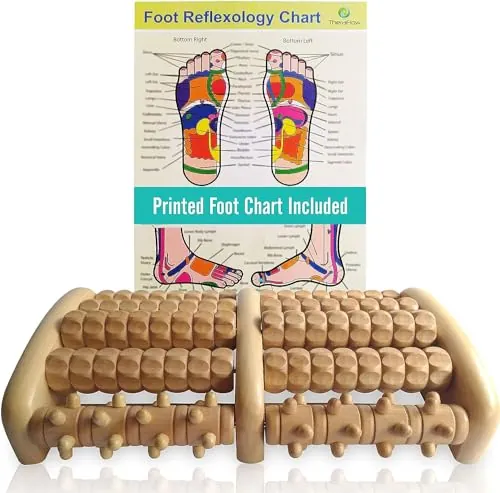
TheraFlow Wooden Foot Massager for Neuropathy, Heel Pain and Targeted Plantar Fasciitis Relief
- Manual roller design lets you control pressure and speed for a more personalised feel.
Comparison
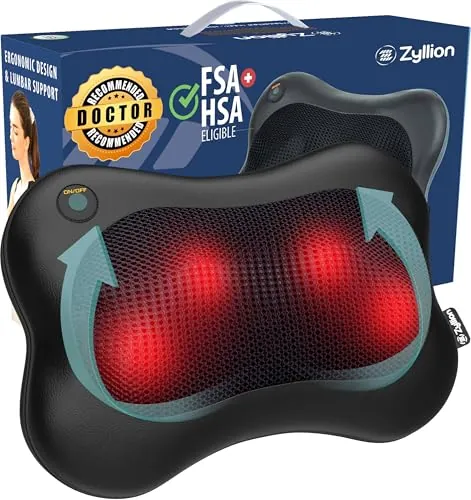
The TheraFlow Wooden Foot Massager is a manual roller aimed at foot, heel, and plantar fasciitis relief, while the Zyllion ZMA-13 is a plug-in shiatsu-style kneading pillow designed for neck and back pain with optional heat. Both are popular at-home massagers with strong overall ratings, but they suit different pain areas and routines. TheraFlow prioritises simplicity and quiet use; Zyllion prioritises powered kneading versatility and heat.
#1 Overall Winner
Contender
Choose TheraFlow if your priority is plantar fasciitis/heel relief, quiet under-desk use, and simple manual control at a low cost. Choose Zyllion ZMA-13 if you want powered kneading for back/neck/shoulders with optional heat and the flexibility to use it at home, in the office, or in the car—accepting that long-term durability feedback is more mixed.
Overall winner
Depends on your needs
| Feature | TheraFlow Wooden Foot Massager for Neuropathy, Heel Pain and Targeted Plantar Fasciitis Relief | Zyllion Shiatsu Back and Neck Massager with Heat (ZMA-13) | Winner |
|---|---|---|---|
| Type & primary use | Manual wooden foot roller (feet/heels) | Electric kneading pillow (neck/back/shoulders; can be used on legs/feet) | Depends |
| Power source | Manual (cordless) | Corded electric (6 ft cord) | TheraFlow Wooden Foot Massager for Neuropathy, Heel Pain and Targeted Plantar Fasciitis Relief |
| Heat function | No heat function listed | Heat mode included | Zyllion Shiatsu Back and Neck Massager with Heat (ZMA-13) |
| Intensity control | User-controlled pressure and speed | User-controlled positioning; motor-driven kneading | Depends |
| Everyday ease (quick sessions) | Place on floor and roll | Plug in and position/strap | TheraFlow Wooden Foot Massager for Neuropathy, Heel Pain and Targeted Plantar Fasciitis Relief |
| Versatility across body parts | Feet only | Back, neck, shoulders, legs, feet | Zyllion Shiatsu Back and Neck Massager with Heat (ZMA-13) |
| Noise in use | Near-silent manual use | Motor-driven operation | TheraFlow Wooden Foot Massager for Neuropathy, Heel Pain and Targeted Plantar Fasciitis Relief |
| Portability | Compact, light, easy to stash under desk | Portable pillow form but needs power; includes car adapter | Depends |
| Build quality signals from feedback | Praised as sturdy and well made | Mixed durability feedback; some early breakage reported | TheraFlow Wooden Foot Massager for Neuropathy, Heel Pain and Targeted Plantar Fasciitis Relief |
| Maintenance | Wipe/keep clean; minimal upkeep | Cover can wear from friction; may need replacement | TheraFlow Wooden Foot Massager for Neuropathy, Heel Pain and Targeted Plantar Fasciitis Relief |
| Safety features | Non-slip base; no powered heat/motor | Overheat protection + auto shutoff after 20 min | Depends |
| Warranty/support info provided | Not specified in provided data | 3-year warranty (with registration extension) | Zyllion Shiatsu Back and Neck Massager with Heat (ZMA-13) |
| Review volume & rating | High review count; strong average rating | Very high review count; strong average rating | Zyllion Shiatsu Back and Neck Massager with Heat (ZMA-13) |
| Price | Lower cost | Higher cost | TheraFlow Wooden Foot Massager for Neuropathy, Heel Pain and Targeted Plantar Fasciitis Relief |
For everyday use at home, TheraFlow works well as a “leave it on the floor” tool you can grab for quick foot relief without planning a session. Its non-slip base and simple shape also make it easy to keep under a desk as a footrest-style roller. The Zyllion fits better into a scheduled relaxation routine (for example, on the sofa, at a desk chair, or before bed), especially if you want heat and a more hands-off kneading action. The trade-off is needing an outlet (or the car adapter) and taking a moment to position it securely.
Both products are aimed at comfort, recovery, and stress relief, but they create that comfort in different ways. TheraFlow is best thought of as a foot comfort tool you can use in short bursts throughout the day, with intensity adjusted by how you roll and press. Zyllion is closer to a deep-tissue-style comfort session for the upper and lower back and neck, and the heat mode can feel soothing when muscles are stiff. If you prefer gentle control, TheraFlow may be easier to dial in; if you want kneading plus warmth, Zyllion has the advantage.
For their main purposes, TheraFlow appears stronger for targeted foot relief, with reviews repeatedly describing plantar fasciitis and heel pain improvement when used consistently. Because it’s manual, performance is closely tied to your technique and pressure tolerance, but it also means you can avoid “too intense” sessions by easing off.
Zyllion performs well for deep kneading in the back and neck areas and is frequently compared by users to a strong massage. However, performance can be more variable depending on comfort with firmer nodes and how well you can position it, and some feedback notes heat-mode limitations (overheating pauses) during heavy use.
TheraFlow’s reliability is supported by its simple, non-powered design and buyer feedback describing it as sturdy, stable, and consistently useful for routine foot rolling. With fewer parts, there’s less to fail beyond normal wear.
Zyllion reliability looks more variable. Reviews include long-term positive experiences (multi-year use) and strong satisfaction, but the aggregated feedback provided also notes reports of units breaking within a short period. Heat mode and connector/cover wear are additional points that may affect dependable day-to-day use for heavy users.
TheraFlow’s safety profile is mostly about comfort and stability: the non-slip strips help reduce sliding, and there’s no heat or motor to manage. However, some users may find the pressure too intense if they press hard, so starting gently is sensible—especially for sensitive feet.
Zyllion includes safety-related features such as overheat protection and auto shutoff after 20 minutes, which can reduce risk from extended sessions. The main practical considerations are cord placement (to avoid trips) and ensuring the pillow is positioned safely so it doesn’t strain the neck or cause discomfort if the nodes feel too firm.
Comfort depends heavily on pressure preference. TheraFlow lets you control intensity very precisely, which helps if your feet are tender—though some users may find the nubs initially uncomfortable, and fit can vary with arch shape and foot width. Zyllion’s kneading nodes can feel deeply relaxing for many people, especially with heat, but the firmness can be a downside for users who prefer gentler massage (one review reports increased pain). If you want adjustable comfort through technique, TheraFlow is easier to moderate; if you want heat and deep kneading, Zyllion can feel more “therapeutic” for some bodies.
TheraFlow is simpler day to day: place it on the floor and roll your feet, with no power cord, pairing, or setup. It can be used with or without socks, and users mention keeping it under a desk. Zyllion’s controls are described as easy, but you still need to plug it in and position it correctly (or strap it to a chair/car headrest). If you want quick, frequent, low-interruption use, TheraFlow is usually easier.
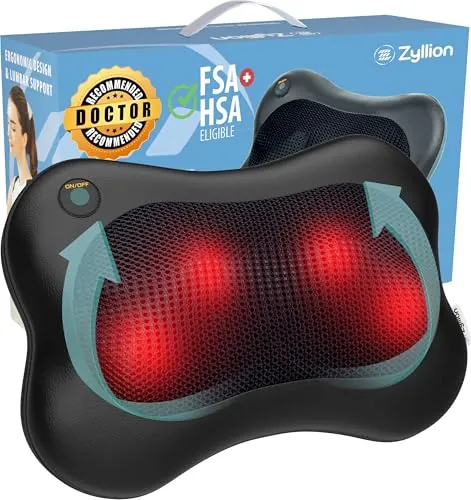
TheraFlow’s design is straightforward and compact, focused on rolling both feet across multiple textured rows. Its low profile makes it easy to store and use in seated positions. Zyllion uses a pillow-style housing with kneading nodes and a fabric cover, plus straps that help keep it in place on chairs and in the car. If your goal is foot-only use and minimal clutter, TheraFlow’s layout is more practical. If you want one device that can be repositioned across multiple body areas, Zyllion’s pillow form is more flexible.
TheraFlow takes up very little space and can live under a desk, by the sofa, or in a small cupboard without clutter. Zyllion is still relatively compact for a powered massager, but it’s bulkier than a wooden roller and adds cord management. In small flats, dorms, or tight home offices, TheraFlow is easier to keep out and use frequently without feeling like another appliance.
TheraFlow is a manual roller, so it’s essentially silent in typical use, which suits shared rooms, work calls, or late-night sessions. Zyllion uses a motor to drive the kneading nodes, so it will create audible operating noise even if it’s commonly described as quiet for its type. If you’re sensitive to sound or want a massager that won’t draw attention in an office, TheraFlow is the safer pick.
TheraFlow’s wooden construction is frequently described as sturdy and well made in the provided feedback, and the non-slip strips help with stable use. Zyllion’s build quality sentiment is more mixed: some users report years of reliable operation, while others mention breakage within a short period and wear/tearing of the cover due to friction from the kneading mechanism. If you prioritise a simple build with fewer failure points, TheraFlow has the advantage.
TheraFlow’s wood construction and lack of electronics generally support better long-term durability, and customers frequently comment that it’s well made. Zyllion’s durability feedback is mixed: some owners report it lasting years, while others mention early failures, and cover wear is described as a likely outcome due to friction from kneading. If you expect daily heavy use, the simpler roller design may hold up with fewer potential weak points.
TheraFlow maintenance is minimal: keep it clean, store it dry (it is not water resistant), and use it on suitable surfaces. There are no replaceable parts mentioned in the provided data. Zyllion requires a bit more attention because the fabric cover can wear from the moving nodes, and users discuss replacement covers. As a powered product, it also benefits from basic care around cords, connectors, and avoiding misuse that puts excess pressure on the motor.
TheraFlow is lightweight and compact, and because it’s manual it’s easy to move from room to room or bring to the office without needing accessories. Zyllion is still portable in the sense that it can be used at home, at a desk chair, or in the car, and it includes a car adapter—but it’s heavier and you’ll need access to power. For truly “anywhere, anytime” portability, TheraFlow is simpler; for travel where you can plug in, Zyllion is more versatile.
Zyllion is the more feature-rich option: it offers heat, timed auto shutoff, auto-rotation for more balanced coverage, and straps plus a car adapter for different setups. TheraFlow keeps features simple: a fixed wooden roller surface with multiple rows/nub textures and a non-slip base, plus a reflexology chart and instructions. If you want settings and built-in session structure, Zyllion has the edge. If you want no settings and instant use, TheraFlow’s simplicity is the feature.
TheraFlow is efficient in a practical sense because it’s human-powered: there’s no electricity use, no charging, and no downtime other than your own comfort limits. Zyllion trades efficiency for convenience—its motorised kneading and heat can feel more “hands-off,” but it requires continuous power and some users report needing breaks during heat mode due to overheating protection. If you want the lowest running overhead and instant readiness, TheraFlow is the more efficient choice.
TheraFlow offers strong value if your primary need is foot relief: it’s low cost, requires no power, and reviews provided frequently describe it as an affordable solution for plantar fasciitis and tired feet. Its value improves further if you’ll use it daily under a desk or while relaxing.
Zyllion costs more, but you’re paying for powered kneading, heat, straps, and use across more body areas, plus clearly stated warranty coverage. Value is best if you regularly need back/neck relief and will use the chair/car versatility. If you only need foot rolling, it may be more massager than you need.
Zyllion provides more explicit trust signals in the supplied data, including a stated multi-year warranty (with registration extension) and reviews describing responsive customer service and replacement parts (such as covers). TheraFlow has strong customer satisfaction signals and consistent product feedback, but warranty/support details are not provided in the data shown. If formal warranty clarity and support history matter most, Zyllion is easier to evaluate from the available information.
Both products have strong average star ratings and substantial review volume. TheraFlow’s feedback provided is notably consistent around plantar fasciitis relief, sturdiness, ease of use, and value, with smaller caveats like width/fit and initial smell for sensitive users. Zyllion has extremely high review volume and many users praise deep muscle relief and the heat function, but sentiment is more split on durability (some report long-lasting units, others report early failures) and on comfort (some find the nodes too hard).
Zyllion states a 3-year warranty (1 year automatic plus an extension with registration) and reviews provided describe responsive support and replacement covers. For TheraFlow, warranty terms are not included in the provided information, so it’s harder to compare support expectations directly. If warranty coverage is a deciding factor, Zyllion is the clearer option based on the data available.
TheraFlow is the stronger overall choice for most people shopping specifically for foot pain and plantar fasciitis relief. Its biggest strengths are consistent buyer satisfaction, a sturdy simple build, quiet use, and excellent value; its main limitation is that results and comfort can vary with foot shape and pressure preference.
Zyllion ZMA-13 is the better fit if you want a powered kneading massager for the back and neck with heat and flexible placement (including car use). Its main strengths are deep-tissue-style relief and features, while its biggest drawback is more mixed durability and occasional comfort issues. There isn’t a single winner for every household—pain location and preferred massage style should decide.
Overall winner
Depends on your needs
If your main goal is foot-specific relief (especially heel and plantar fasciitis discomfort) and you want something quiet, simple, and low maintenance, the TheraFlow roller is the more direct fit. If you want a powered kneading massage for the neck and back with optional heat and flexible positioning, the Zyllion ZMA-13 tends to make more sense. The best choice depends on where you feel pain most.
The TheraFlow is purpose-built for feet and is repeatedly described by buyers as helpful for plantar fasciitis and heel pain, with intensity controlled by how you roll and press. The Zyllion can be used on feet and is listed for plantar fasciitis use, but it’s primarily designed as a kneading pillow for larger muscle groups, so comfort will depend on how the nodes feel under your feet.
The TheraFlow is very straightforward: place it on the floor and roll your feet, with no power or settings to manage. The Zyllion is also easy once set up, but it requires plugging in (or using the car adapter) and positioning the pillow correctly, and you’ll typically run timed sessions. For quick “whenever” use at a desk, the manual roller is usually simpler.
The TheraFlow is manual, so it’s effectively silent aside from minor contact sounds, which suits shared workspaces or late-night use. The Zyllion uses a motor to drive kneading nodes, so it will produce operating noise even if many users consider it relatively quiet. If noise sensitivity is a priority, the manual option is the safer bet.
It can still be portable in the sense that you can move it between rooms, use it on an office chair, and take it in the car using the included car adapter. However, it’s not cordless, so you’ll always be managing access to power and the cord. If you want truly grab-and-go use with no outlet needed, the TheraFlow roller is more convenient.
The TheraFlow is a simple wooden roller with non-slip strips, and buyer feedback provided highlights sturdiness. For the Zyllion, customer sentiment is more mixed: some reviewers report years of use, while others mention early breakage and cover wear from friction. If long-term reliability is your top concern, the simpler, fewer-parts design of a manual roller can be an advantage.
The TheraFlow costs significantly less and gets strong feedback for foot pain relief, making it a strong value if feet are your main issue. The Zyllion costs more but includes powered kneading, heat, straps for mounting, and a stated warranty (with extension by registration). Value depends on whether you will actually use the extra features and multi-body versatility often enough to justify the higher spend.
The TheraFlow is commonly used under a desk as a footrest-style roller, and it stays in place with non-slip strips, making it well suited to workday micro-breaks. The Zyllion can be used while seated, but it’s typically strapped to a chair or positioned behind you, and it needs power. For discreet, continuous foot use while typing, TheraFlow is usually the easier match.
Check our rankings and expert guides to find the best home lifestyle products for your goals.