#1 Overall Winner
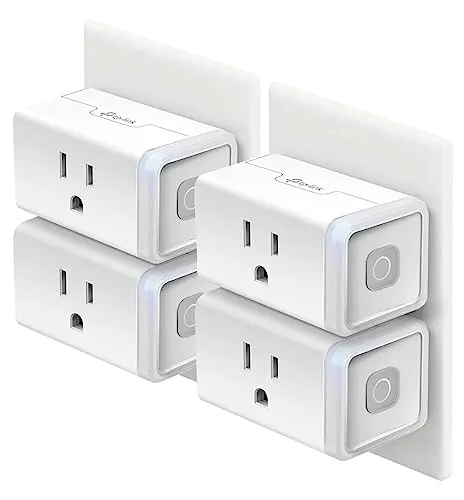
Kasa Smart Plug HS103P4 (4-Pack)
- Very easy setup with clear in-app guidance (commonly praised in reviews)
Comparison
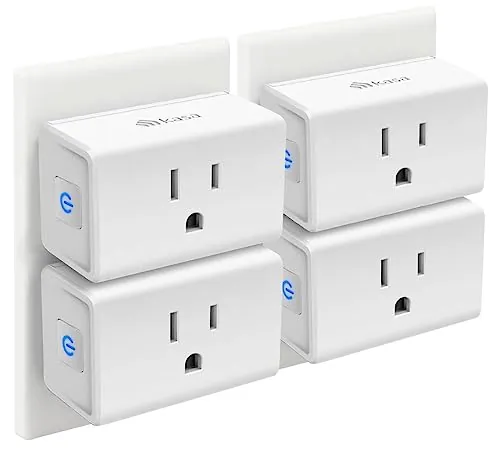
The Kasa HS103P4 and Kasa Smart Plug Mini EP10P4 are Wi‑Fi smart plug 4-packs designed to add app, voice, and scheduling control to everyday outlets. Both work with Alexa and Google Assistant and focus on simple automations like lighting schedules and remote shutoff. The clearest practical difference is outlet fit: the EP10P4 is positioned as a compact mini plug to avoid blocking adjacent sockets.
#1 Overall Winner
Contender
Choose the Kasa EP10P4 if you want a compact smart plug that’s less likely to block a second outlet and you’re shopping primarily on value. Choose the Kasa HS103P4 if you want a widely used Kasa plug with very strong buyer sentiment and simple, dependable scheduling and voice control—while accepting that some users report occasional Wi‑Fi/app rough edges.
Overall winner
Depends on your needs
| Feature | Kasa Smart Plug HS103P4 (4-Pack) | Kasa Smart Plug Mini EP10P4 (4-Pack) | Winner |
|---|---|---|---|
| Type | Wi‑Fi smart plug (4-pack) | Wi‑Fi smart mini plug (4-pack) | Tie |
| Hub required | No | No | Tie |
| Voice assistants | Alexa, Google Assistant | Alexa, Google Assistant | Tie |
| IFTTT support | Yes (listed) | Yes (listed) | Tie |
| SmartThings mention | Used with SmartThings in reviews | Mentioned in product description | Tie |
| Wi‑Fi requirement | 2.4GHz required | 2.4G Wi‑Fi only | Tie |
| Electrical rating | 15A, 120V, 1800W | 15A, 120V, 1800W | Tie |
| Physical size | 1.57 x 1.5 x 2.62 in | 2.36 x 2.03 x 1.5 in | Depends |
| Outlet-blocking risk | Some users wish it were more compact | Designed not to block second outlet | Kasa Smart Plug Mini EP10P4 (4-Pack) |
| App experience feedback | Mostly positive; some UI readability/timer workflow complaints | Often described as intuitive/robust | Kasa Smart Plug Mini EP10P4 (4-Pack) |
| Connectivity feedback | Mixed; some Wi‑Fi issues reported | Mixed; some connection/Alexa issues reported | Tie |
| Noise/clicking | Some users notice a click when switching; LED can be bright | No specific noise complaints provided | Depends |
| Safety certification | UL certified (listed) | UL certified (listed) | Tie |
| Warranty info | Not specified in provided data | 2-year warranty stated | Kasa Smart Plug Mini EP10P4 (4-Pack) |
| Price (as listed) | 27.03 | 14.33 | Kasa Smart Plug Mini EP10P4 (4-Pack) |
For everyday home use, both plugs are well suited to automating “dumb” devices: floor lamps, fans, humidifiers, chargers, and seasonal lighting. HS103P4 reviews often focus on simple routines (bedtime shutoff, sunrise/sunset lighting) and smooth Alexa control. EP10P4 reviews highlight convenience for device reboots and grouped scheduling, and its compact shape can make it easier to deploy across bedrooms, living rooms, and hallways without sacrificing a second outlet.
In kitchen routines, both can help automate small appliances that are appropriate for switched outlets (for example, turning accent lighting on/off or cutting standby power to certain devices). Neither listing provides kitchen-specific safety features or appliance-type limitations, so the key practical check is whether the plugged-in device is suitable to be turned off at the wall and stays within the plug’s stated electrical rating.
Both plugs can support comfort routines by automating devices like fans or humidifiers (explicitly mentioned in the HS103P4 listing). Scheduling and remote shutoff are useful for avoiding running comfort devices longer than needed. Since both depend on Wi‑Fi/app control for remote access, households that frequently adjust schedules may prefer the EP10P4’s more favorably described app interface, while HS103P4 has many reviews praising hands-free Alexa use from the sofa or bed.
As on/off smart outlets, both plugs appear to deliver strong core performance: quick switching, dependable scheduling, and responsive voice control when connected. HS103P4 reviews repeatedly mention fast setup and near-instant Alexa response, but the aggregated feedback also notes some Wi‑Fi connection trouble and occasional early failures. EP10P4 reviews similarly praise stable connections and useful scheduling (including automated power cycling), with some mixed experiences around connectivity and assistant integration. In practice, performance is close; network environment and outlet placement tend to be the deciding factors.
Reliability looks good overall for both, but not flawless. HS103P4 has a clear pattern in aggregated feedback: many households report stable connections and consistent control, while some report Wi‑Fi connection issues and a smaller number mention the plug stopping after a short period. EP10P4 also receives mixed connectivity comments; some users report stable, long-running schedules, while others describe assistant or connection hiccups, especially around router changes. If your network is frequently changed or uses mesh systems, expect occasional re-setup and follow the remove/reset sequence described by reviewers.
Neither product is a security sensor or camera, but smart plugs can contribute to basic “occupied home” routines. EP10P4 explicitly mentions an Away Mode concept in its description to simulate occupancy with lights, while HS103P4 is commonly used by reviewers for scheduled lighting that can make a home look lived-in. For this use, reliable schedules matter more than raw features, and both have mixed connectivity feedback depending on network conditions.
For security-adjacent use, smart plugs are mainly about lighting routines rather than detection. EP10P4’s description highlights Away Mode/occupancy simulation, and HS103P4 reviews frequently describe scheduled lights for convenience and presence. Neither product provides monitoring alerts, sensors, or dedicated security features in the provided data, so treat this as simple automation rather than a security system replacement.
Both plugs are listed as UL certified and are rated for 15A and 120V operation, which are important baseline indicators for safe household use when used as directed. EP10P4’s description also mentions flame-retardant materials, while HS103P4 emphasizes UL certification. For either product, practical safety comes down to matching the plug to appropriate loads, avoiding use in wet locations (both are positioned for indoor use), and ensuring the outlet is in good condition so the plug fits snugly without overheating risks.
Comfort improvements mainly come from convenience: not having to reach behind furniture, being able to turn devices off from bed, and having lights come on before you arrive home. HS103P4 reviews strongly emphasize hands-free Alexa use and sunrise/sunset-style routines for plant lights and evening lighting. EP10P4’s compact design can also improve “comfort” indirectly by reducing outlet clutter and making it easier to keep both sockets usable in frequently used rooms.
Both are widely described as easy to set up, especially within the Kasa app. HS103P4 reviews highlight clear step-by-step guidance, but a few users mention small app UI issues (hard-to-read text and separate timer setup for on vs off). EP10P4 feedback is also very positive, though some users note the common pairing step of briefly switching Wi‑Fi networks during setup. Day-to-day use is simple on both once configured.
Design is where these two differ most in day-to-day practicality. The EP10P4 is explicitly designed to be ultra-compact so it won’t block the second outlet on a standard socket, making it easier to deploy in kitchens, bedrooms, and behind furniture. HS103P4 is still compact, but some reviewers wish it were smaller for power strips or tight spaces. HS103P4 also has feedback about a bright status LED, which may matter for bedside placement.
EP10P4 is the clear winner for space efficiency because it’s specifically designed not to block the second outlet and is positioned as an ultra-compact mini plug. HS103P4 can still work well in many placements, but user feedback includes wishes for a smaller body in some setups like power strips. If your home has tight outlet access behind furniture or you often need both sockets, EP10P4 is the safer pick.
Noise is typically minimal for smart plugs, but HS103P4 reviews mention a noticeable click when switching on/off and also note the status LED can be bright in a dark room. EP10P4 reviews provided don’t call out switching noise, but that doesn’t guarantee it’s silent. If you’re placing plugs in a bedroom, HS103P4’s LED brightness is the clearer consideration based on buyer feedback.
Installation is simple plug-in setup for both models: plug in, add in the Kasa app, and link to Alexa/Google if you want voice control. EP10P4 reviews mention the typical pairing step of connecting your phone to the device’s temporary Wi‑Fi network during setup, which can feel confusing the first time but is quick once you know the flow. HS103P4 reviews emphasize especially smooth step-by-step guidance, making it a good first smart-home install.
Neither product includes detailed construction teardown info in the provided data, but both are positioned as UL-certified plugs intended for typical indoor household use. EP10P4 specifically mentions flame-retardant materials in the description, while HS103P4 reviews focus more on functional reliability than physical robustness. With either, long-term quality appears generally good with some reports of early failure, so avoiding over-stressing the plug and ensuring a solid outlet fit is important.
Long-term durability signals are generally positive for both based on high satisfaction and repeat purchases mentioned in reviews, but there are also reports of early failure (notably in the HS103P4 aggregated overview). EP10P4 feedback includes ongoing use across multiple plugs, but doesn’t eliminate the possibility of unit-to-unit issues. For either model, durability will be helped by using them indoors, avoiding loose outlets, and staying within the stated electrical load.
Maintenance is minimal for both: there are no filters or consumables, and day-to-day care is mostly keeping them dry and ensuring a solid outlet connection. The most common “maintenance” task is digital—resetting and re-adding the plug if you change routers, SSIDs, or passwords. EP10P4 reviews provide a clear example that removing the plug from the app and then resetting can resolve setup trouble, while HS103P4 owners also report quick reconnection once set up correctly.
Both are highly portable because they’re small, plug-in devices with no permanent mounting. They can be moved room-to-room for seasonal needs (holiday lights) or temporary setups (traveling between rooms to automate fans or lamps). EP10P4’s compact design may be slightly easier to relocate into tight outlet spaces without rearranging other plugs, while HS103P4 remains easy to move and reassign in the app.
Feature sets overlap heavily: app-based remote control, voice control (Alexa/Google), and scheduling with timers/countdowns. EP10P4’s listing adds an “Away Mode” framing for occupancy simulation and mentions Kasa or Tapo app compatibility, while HS103P4 reviews frequently describe sunrise/sunset-style scheduling and integrations inside broader smart-home routines. Neither listing indicates energy monitoring, so if you need usage tracking, you’d need a different plug model.
Both are driven by the Kasa app experience. HS103P4 reviews mostly describe the app as intuitive and helpful, but there are specific complaints about faint wording and the way timers are set up for on vs off actions. EP10P4’s aggregated feedback is more consistently positive about an intuitive interface, and reviews describe scheduling as easy and robust. If you expect to manage lots of schedules, EP10P4 has a slight edge based on the provided feedback.
Both smart plugs are built for common smart-home ecosystems: Alexa and Google Assistant voice control, plus IFTTT support. HS103P4 reviews also describe SmartThings integration and building more complex automations, while EP10P4’s description references SmartThings and the option to use Kasa or Tapo app. If your smart home is mainly voice routines and simple schedules, either works well; if outlet crowding is a concern across your setup, EP10P4’s compact design is the more practical advantage.
Both plugs work well in routine-based smart homes: voice commands for quick control, app schedules for predictable automation, and IFTTT support for broader triggers. HS103P4 reviews mention using the plugs inside more complex smart-home scenarios (for example, triggering lights through other smart devices), while EP10P4 reviews focus on reliable schedules and practical automation like daily power cycling. If you’re building many automations and need clean placement across outlets, EP10P4’s mini design can be the easier rollout.
Automation features are strong on both: timers, countdowns, and schedules are central to each product, and users routinely automate lighting and device shutoffs. HS103P4 reviews include sunrise/sunset-style routines and whole-home “goodnight” style voice routines through Alexa. EP10P4 reviews emphasize practical automation like scheduled power cycling to keep devices reliable. If you’re automating many plugs at once, both support the core routine-building approach.
Connectivity is broadly similar: both use Wi‑Fi (2.4GHz) and rely on stable home networking for remote/app control. HS103P4 has mixed feedback—many users report it stays connected, while others mention Wi‑Fi connection problems. EP10P4 shows the same pattern, including mixed Alexa integration experiences. If your router is dual-band, ensuring your phone and plug are on 2.4GHz during setup can reduce pairing issues, as suggested in user feedback.
Neither listing provides measured energy-use data, but both can improve practical efficiency by scheduling devices to turn off automatically and reducing unnecessary runtime (a theme in buyer feedback for EP10P4). Keep in mind that remote control depends on your network for access, but scheduled routines can reduce “left on all day” waste. If your goal is energy tracking rather than timed control, neither product is described as offering consumption monitoring.
Both plugs rely on app-based control and voice assistant linking, which typically involves account access and cloud connectivity for remote control. The provided data does not include detailed information about data handling, local-only control, or encryption specifics. If you’re privacy-sensitive, consider what permissions the app requests, whether multiple household members need accounts, and how you secure your Wi‑Fi and voice assistant accounts, since those are the primary control paths.
Value favors the EP10P4 in the provided listings because it’s priced lower for a 4-pack while still offering the same core functions: voice control, schedules, and remote on/off. HS103P4 can still be good value for households that prioritize a long, well-established track record and very large-scale buyer feedback, especially if you want consistent setup guidance and broad ecosystem use reported by owners. With either, the best value comes from buying enough plugs to cover routine pain points (lamps, seasonal lights, device reboots) rather than scattering them randomly.
Both products are sold under the Kasa Smart brand and manufactured by TP-Link in the provided data, so brand trust signals are largely shared. Reviews for both reference owning multiple Kasa/TP-Link devices and expanding within the ecosystem, which suggests consistent experiences for many households. The main brand-related trade-off is transparency: EP10P4 includes clearer warranty information in the listing, while HS103P4’s provided details don’t specify warranty length.
Both packs have strong overall ratings and generally positive sentiment focused on easy setup, useful scheduling, and reliable day-to-day control. HS103P4 stands out for sheer volume of reviews and repeated praise for Alexa integration and ease of use, though connectivity and reliability are described as mixed in aggregated feedback. EP10P4 also receives strong satisfaction comments—especially around compact fit and value—while still showing some mixed reports about connectivity and assistant integration. Overall sentiment is favorable for both, with EP10P4 slightly more “value + compact” oriented.
The EP10P4 listing explicitly states a 2-year warranty, giving shoppers clearer expectations for support coverage. For HS103P4, warranty/support details are not specified in the provided information. If warranty terms are important, confirm coverage and the returns process for whichever pack you choose, especially if you’re deploying many plugs across the home.
Both Kasa 4-packs deliver the core smart-plug experience well: app control, voice commands, and dependable scheduling for lights and small appliances. The EP10P4 edges ahead for many households because its mini design is purpose-built to avoid blocking adjacent outlets and it’s listed at a lower price, making it easier to deploy widely without frustration.
The HS103P4 remains a strong alternative with extremely high buyer satisfaction and many reviews describing smooth Alexa control and easy setup. Its main drawbacks are mixed reports of Wi‑Fi issues for some homes and a few app/interface nitpicks (plus a bright LED for bedroom use). If you’re choosing one pack for most homes, EP10P4 is the more practical default; HS103P4 is still a safe choice if you prefer its established track record.
Overall winner
Depends on your needs
Both are strong Wi‑Fi smart plug 4-packs with Alexa/Google voice control and scheduling. If outlet space is tight, the EP10P4’s compact “mini” design is the clearer advantage. If you want a widely adopted option with a huge volume of buyer feedback and strong Alexa/SmartThings-style use cases mentioned in reviews, the HS103P4 remains a solid pick.
The Kasa EP10P4 is the better fit for small spaces in most homes because it’s specifically described as ultra-compact and designed not to block the second outlet on a standard wall socket. The HS103P4 works well too, but reviews mention wishing it were more compact for certain setups like power bars or tight outlet placements.
Yes. Both the HS103P4 and EP10P4 are described as no-hub-required Wi‑Fi smart plugs. They connect directly to your home’s 2.4GHz Wi‑Fi network and are controlled through the Kasa app (the EP10P4 listing also mentions the Tapo app). Voice control is then enabled by linking the Kasa account to Alexa or Google.
Buyer feedback for both packs repeatedly highlights easy setup. The HS103P4 is often described as quick to add in the Kasa app with straightforward Alexa linking. EP10P4 reviews also call setup fast, though a few mention the typical Wi‑Fi pairing step where you temporarily connect your phone to the plug’s setup network during installation.
Neither product has perfectly consistent feedback: both listings show mixed reports about Wi‑Fi/Alexa connectivity. Many users say each plug stays connected and responds quickly, while a smaller group reports connection trouble. If your home network changes (new router/mesh), following the reset/remove-and-readd steps described in reviews can make a big difference for EP10P4.
Based on review feedback, both can continue running schedules in some offline scenarios, but app control won’t work without internet. HS103P4 reviews mention schedules continuing and automatic reconnection when internet returns. EP10P4 reviews also note schedules can persist if Wi‑Fi drops, though a full power outage may require the plug to reconnect to sync time and reload schedules.
Apple HomeKit support is not indicated in the provided product details for either model, and one EP10P4 review explicitly lists “No Apple HomeKit” as a con. If HomeKit is a must-have, you’ll want to confirm compatibility before buying rather than assuming it’s included because the plugs support Alexa and Google Assistant.
Both are generally described as user-friendly, but the EP10P4 listing and reviews more directly praise an intuitive app interface. For HS103P4, most feedback is positive, though a few users mention interface readability (faint wording) and the need to set separate on/off timers. If you rely heavily on in-app scheduling, these small differences may matter.
Check our rankings and expert guides to find the best home lifestyle products for your goals.