
#1 Overall Winner
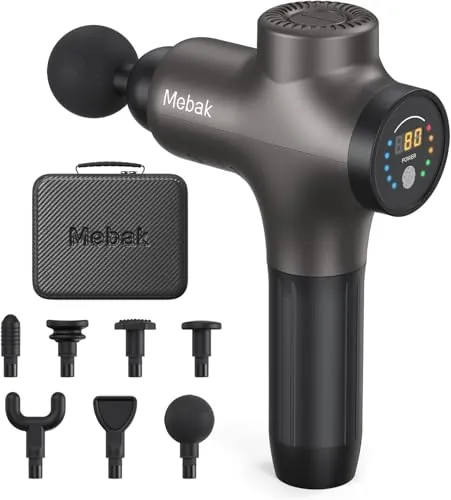
Mebak 3 Massage Gun
- Strong deep-tissue style percussion with 12mm amplitude and high stated stall force for working into tight muscles.
Comparison
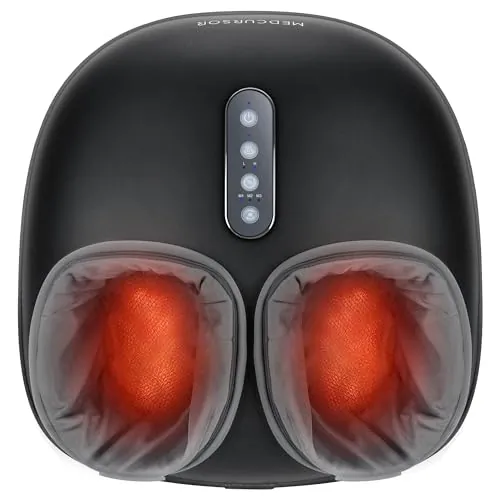
The Mebak 3 is a cordless percussion massage gun built for whole-body muscle recovery with multiple heads and a pressure indicator, while the Medcursor is a corded shiatsu-style foot massager that adds optional heat, air pressure, and a shut-off timer. If you want one tool for back, shoulders, legs, and post-workout tightness, the Mebak is the more flexible option. If your main goal is end-of-day foot relief (especially arch/heel/sole), Medcursor is the more targeted choice.
#1 Overall Winner
Contender
Choose the Mebak 3 if you want a portable, whole-body massage gun with multiple heads and guided pressure feedback for post-workout or daily muscle tightness. Choose the Medcursor Foot Massager if you mainly need relaxing, hands-free foot kneading with optional heat and a timer—just be prepared for mixed feedback on heat strength and comfort depending on sensitivity.
Overall winner
Depends on your needs
| Feature | Mebak 3 Massage Gun | Medcursor Foot Massager with Heat (MDFM400) | Winner |
|---|---|---|---|
| Type of massager | Percussion massage gun | Shiatsu-style foot massager machine | Depends |
| Primary target area | Whole body | Feet (up to size 13) | Depends |
| Power source | Battery powered (cordless) | Corded electric | Mebak 3 Massage Gun |
| Heat function | Not listed | Yes (on/off; preheat advised) | Medcursor Foot Massager with Heat (MDFM400) |
| Timer / auto shut-off | Not listed | 15-minute auto shut-off timer | Medcursor Foot Massager with Heat (MDFM400) |
| Attachments / massage options | 7 heads; 5 speed levels; pressure indicator | Multiple settings combining kneading, heat, and air pressure | Depends |
| Noise guidance | 39–50 dB stated range | No dB rating provided | Mebak 3 Massage Gun |
| Weight | 1.68 lb (3.08 lb with case) | 4 lb | Mebak 3 Massage Gun |
| Ease of cleaning | Wipe device/heads; store in case | Wipe PU exterior; removable washable foot sleeve | Medcursor Foot Massager with Heat (MDFM400) |
| Reliability signals from feedback | Some battery/charging failure reports | Some early failure/uneven function reports; mixed heat reports | Tie |
| Comfort variability | Pressure can be guided; handle may feel large | Pressure sometimes reported as painful; comfort mixed | Mebak 3 Massage Gun |
| Value for the price | Strong satisfaction; versatile kit | Strong foot relief for many; heat and modes | Depends |
For general home use, these two devices fit different routines. The Mebak 3 is more flexible because you can use it quickly on different muscle groups (neck/shoulders, legs, back) and put it away in its case. The Medcursor is better for a consistent “sit down and unwind” foot routine, but it’s more location-dependent because it needs a power outlet and is designed to stay on the floor by a chair or desk.
Both products are comfort-focused rather than climate-control devices. The Mebak 3 is geared toward muscle recovery and trigger-point work across the body, which can improve day-to-day comfort for people with tightness from exercise or desk posture. The Medcursor focuses comfort specifically in the feet, adding an optional heat function and compression-like air pressure for a more relaxing, end-of-day feel. If your discomfort is mainly “tired feet,” Medcursor is the more direct option; if it’s broader soreness, Mebak fits better.
For performance in its main job, the Mebak 3 is the stronger all-rounder: it’s designed for deep percussion massage and includes multiple heads and speeds to reach different muscle groups. Reviews frequently mention effective relief for sore muscles and post-workout tightness. The Medcursor performs best when the goal is foot relief—buyers often describe the kneading as deep and relaxing, and some mention benefits for plantar-related discomfort—though a minority report uneven operation or that it doesn’t meet their expectations for coverage. If you need consistent performance across the whole body, the massage gun has the advantage.
Reliability is a meaningful consideration for both. Mebak 3 has very strong overall satisfaction, but there are repeated signals of battery/charging issues and occasional reports of the unit stopping after a few months, which aligns with its weaker reliability interpretation. Medcursor also shows reliability concerns, including reports that it may not work on both sides and mentions of early failures, plus mixed heat function results. If reliability risk worries you, prioritise a clear return window and keep packaging until you’re confident the unit is stable.
Both products require sensible use. With the Mebak 3, reviews explicitly caution that it’s powerful enough to cause harm if used with the wrong attachment or too much pressure; the pressure indicator can help users moderate force, but technique still matters, especially on sensitive or injured areas. The Medcursor includes a 15-minute auto shut-off timer, which is a practical safety feature for unattended or relaxing sessions. Neither product is water resistant, so both should be kept away from water and used only in dry conditions.
Comfort depends heavily on sensitivity and where you need relief. Mebak 3 offers adjustable speed and a pressure indicator, which can help users stay in a comfortable range, though it can still be intense if used aggressively. Medcursor comfort is more polarised: many users find it deeply relaxing, while others say the pressure is painful or not comfortable, and heat satisfaction varies. For households with mixed tolerance to pressure, Mebak’s incremental control and body-area flexibility may be easier to tailor.
The Medcursor is generally easier for hands-free use: plug it in, choose a mode, and let the timer run, with minimal technique required. The Mebak 3 is still straightforward, but it requires more user involvement—choosing a head, holding the device at the right angle, and managing pressure (helped by the LED indicator). Some users also mention the Mebak handle can feel large, which may affect comfort during longer sessions.
Mebak 3’s design is centred on handheld ergonomics and storage: it’s compact enough to carry, and the case helps keep heads organised. The trade-off is that a handheld design can be harder for some users to grip comfortably (especially if the handle feels large). Medcursor’s design prioritises stability and routine use: it stays put on the floor and accommodates feet up to size 13, but it takes up more floor space than a handheld device and needs to be near an outlet.
Capacity means different things here. Mebak 3 “covers” more of the body because it’s intended for whole-body use and includes multiple heads for different muscle groups. Medcursor’s capacity is more literal: it fits feet up to size 13, which is useful for shared household use, but it’s restricted to the foot area. If you need broader coverage, Mebak has the advantage; if fit matters for larger feet, Medcursor provides a clear guideline.
For small spaces, Mebak 3 is easier to live with because it stores in its case and doesn’t need a dedicated floor spot. Medcursor takes up floor space and tends to live near seating, which can be fine in a home office or lounge but may feel bulky in tight flats or shared rooms. If you want to tuck the device away between sessions, the handheld design is the more space-efficient option.
Noise is more clearly defined for the Mebak 3, with the listing stating a 39–50 dB operating range, which should be workable in shared home or office environments. The Medcursor doesn’t provide a noise specification in the provided data, and kneading/air pressure mechanisms can be noticeable depending on the mode. If quiet use is a key requirement, Mebak is the safer choice based on the available information.
Based on the provided data and feedback, Mebak 3 is often described as solid and well made for the price, but there are notable reports of battery/charging problems that can affect perceived quality over time. Medcursor’s construction includes a PU exterior and removable sleeve, but reviews and scoring signals point to more mixed build confidence, with mentions of early failures and occasional uneven operation. Neither looks like a “buy once, keep forever” pick from the available evidence, but Mebak has stronger overall sentiment.
Long-term durability looks mixed across both devices. Mebak 3 has some owners reporting multi-year use, but other reviews mention failures tied to charging/battery health, which can limit lifespan for cordless devices. Medcursor durability is also uncertain, with some early failure reports and mixed build confidence in feedback. In both cases, avoiding overly aggressive use, storing in a dry place, and following session guidance may help, but neither has enough provided warranty detail to guarantee longevity.
Mebak 3 maintenance mainly involves keeping the massage heads clean, storing the kit in its case, and managing charging (including using a suitable adapter, since one isn’t included). Medcursor maintenance is focused on hygiene: wiping the PU surface and washing the removable foot sleeve when needed. If you prefer maintenance you can “see” (wipe and wash), Medcursor is simpler; if you prefer a compact kit you can store away, Mebak’s case-and-head setup is convenient, but battery care matters.
The Mebak 3 is clearly more portable: it’s cordless, relatively lightweight, and includes a carrying case that suits travel, the gym, or moving around the house. The Medcursor is portable only in the sense that you can relocate it, but at 4 lb and with a corded design it’s better treated as a stay-in-one-spot device for a chair, sofa, or under a desk near an outlet.
Mebak 3’s key features are its interchangeable head set, adjustable speed levels, and an LED pressure sensor indicator that helps users avoid pressing too hard. Medcursor’s features focus on session-style use: optional heat, a 15-minute auto shut-off timer, and modes that combine kneading with air pressure. In short, Mebak is built for targeted variety across body areas, while Medcursor is built for a more automated foot routine with heat/timer convenience.
Neither product includes detailed energy-use data in the provided information, so efficiency is mostly about practical operation. Mebak 3 is cordless and designed for short targeted sessions, but it relies on battery health and correct charging (with some reviews reporting charging failures). Medcursor is corded, so you don’t manage battery charging, but it encourages timed sessions (auto shut-off) and preheating for best heat performance. In practice, Medcursor can be simpler day-to-day, while Mebak depends more on battery reliability.
Both products sit in a similar price range, so value comes down to how much use you’ll get from the format. Mebak 3 tends to offer strong value for people who will use multiple heads across different body areas, and buyer feedback frequently praises how much you get for the money. Medcursor offers good value if you specifically want foot kneading, heat, and compression-style air pressure in one device, but mixed heat feedback and occasional functional issues can reduce value for some users. The better value choice is the one that matches your main pain points.
From the provided data, neither brand includes detailed warranty terms or long support history, so brand trust is largely inferred from buyer sentiment and reported issues. Mebak 3 has very high satisfaction and many reviews, but recurring mentions of charging/battery failures affect confidence. Medcursor is also widely reviewed and often praised for effectiveness, but mixed heat and occasional “doesn’t work properly” reports weigh on trust. If brand support matters to you, prioritise retailer returns and keep proof of purchase.
Customer satisfaction is stronger for the Mebak 3 overall, with a higher average rating and a very large review count. Buyers frequently mention effective relief, strong power, useful attachments, and ease of use, with complaints more centred on handle size and charging/battery failures. Medcursor also has a large review base and many positive comments about deep kneading and relaxation, but it has more mixed sentiment around comfort (too painful for some), whether heat is noticeable, and occasional uneven function.
Warranty/support details are limited in the provided data. One Mebak 3 reviewer reports using the warranty process easily, but they were still concerned about repeat failure. For Medcursor, no specific warranty process details are provided here. For either product, treat support as uncertain and rely on the seller’s return policy and documented purchase information.
Overall, Mebak 3 is the better fit for most shoppers because it’s a versatile, cordless massage gun with strong reported muscle relief, multiple heads, and a pressure indicator that helps control intensity. Its main limitation is mixed long-term reliability feedback, especially around charging and battery issues.
Medcursor is the better choice when your priority is dedicated foot care: deep kneading, optional heat, air pressure, and a 15-minute auto shut-off make it easy to use for end-of-day relaxation. Its main drawbacks are mixed reports on how well the heat works and comfort variability, with some users finding the pressure too strong or operation uneven.
Overall winner
Depends on your needs
It depends on where you need relief. Mebak 3 is a cordless percussion massage gun designed for whole-body use with multiple heads and a pressure indicator. Medcursor is a dedicated foot massager that focuses on kneading (plus optional heat and air pressure) for the sole, arch, and heel. Choose based on whether you want full-body targeting or feet-only sessions.
The Medcursor Foot Massager is the more direct fit for foot-focused issues because it’s built around shiatsu-style kneading and is designed to cover the forefoot, arch, and heel. Reviews frequently mention relaxation after long days and relief for plantar-related discomfort, though comfort can vary and some users find the pressure intense or the heat inconsistent.
The Mebak 3 is typically the better portable choice because it’s cordless, relatively lightweight for a massage gun, and includes a carrying case. That makes it easier to pack for competitions, trips, or gym bags. The Medcursor is corded and bulkier, so it’s usually better kept at home or under a desk near a power outlet.
The Mebak 3 is positioned as the quieter option, with the listing stating a 39–50 dB operating range, which can suit home or office use. The Medcursor doesn’t provide a dB rating in the provided data, and foot massagers can vary depending on kneading and air pressure modes. If noise is a priority, the Mebak has clearer noise guidance.
Only the Medcursor includes a built-in heat function, and it can be turned on or off. However, buyer feedback is mixed: some users say the heat is plenty warm, while others report they can’t feel it or believe it isn’t working. The product instructions also suggest preheating for several minutes before use.
Both are fairly low-effort, but in different ways. The Medcursor is designed to be wiped down and includes a removable, washable zippered foot sleeve, which helps for shared household use. The Mebak 3 mainly involves keeping the device and heads clean and stored in its case; it doesn’t have washable sleeves but is straightforward to wipe and maintain.
Yes—both have some caution signs in the provided feedback. Mebak 3 reviews include reports of battery/charging problems and units stopping, although others report long-term use. Medcursor reviews mention occasional early failures and cases where it may not work correctly on both sides, plus mixed feedback on heat. For either, buying from a seller with clear returns/support matters.
The Mebak 3 is the clear match for full-body muscle recovery because it’s designed for whole-body use and includes multiple heads plus adjustable speed levels. Reviews mention using it on shins, back, shoulders, and post-workout soreness. The Medcursor is purpose-built for feet and won’t replace a massage gun for larger muscle groups.
Mebak 3 uses percussion, which is a rapid tapping action that many people use for trigger points and tight muscles across the body. Medcursor uses kneading (and air pressure), which tends to feel more like rolling/pressing on the foot and can be very relaxing, but may also feel too strong for some users depending on sensitivity and intensity settings.
Check our rankings and expert guides to find the best home lifestyle products for your goals.