#1 Overall Winner
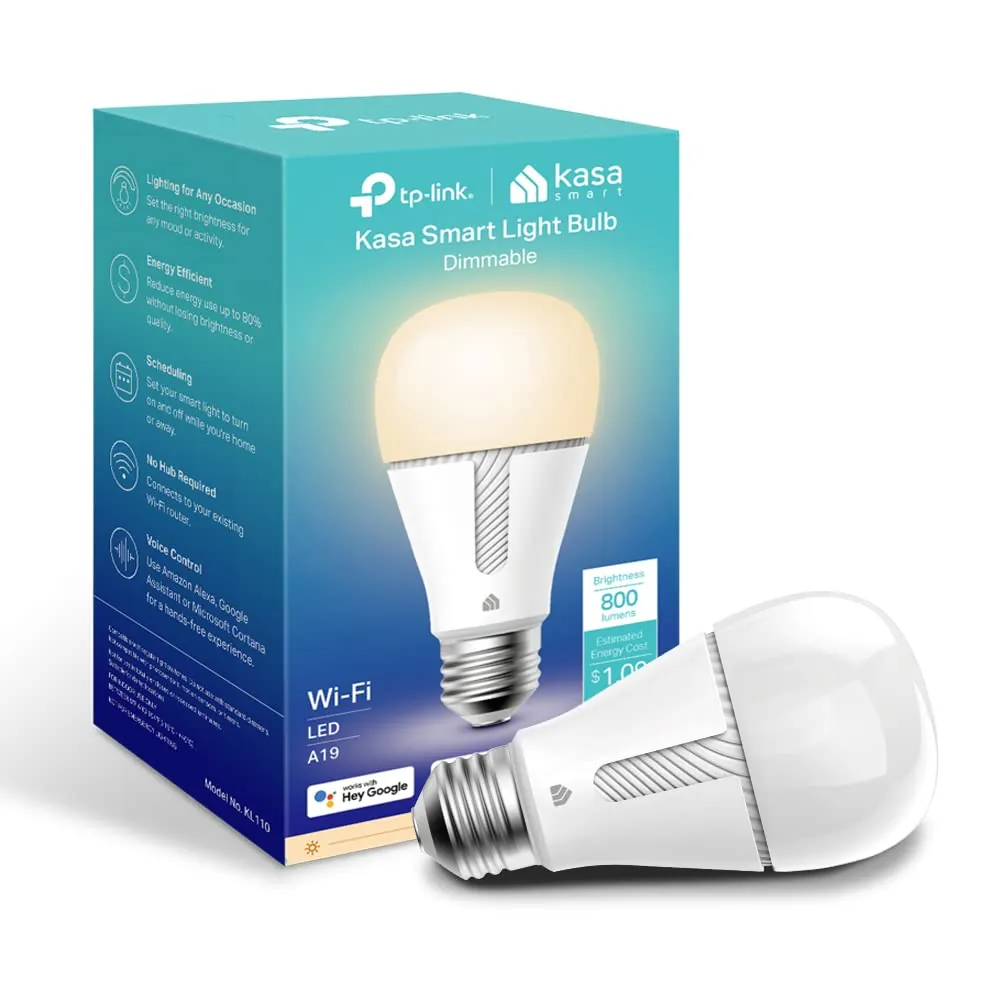
Kasa Smart Light Bulb KL110 (A19 Dimmable, 800lm Soft White 2700K)
- Smooth dimming control across a wide range (1–100%).
Comparison
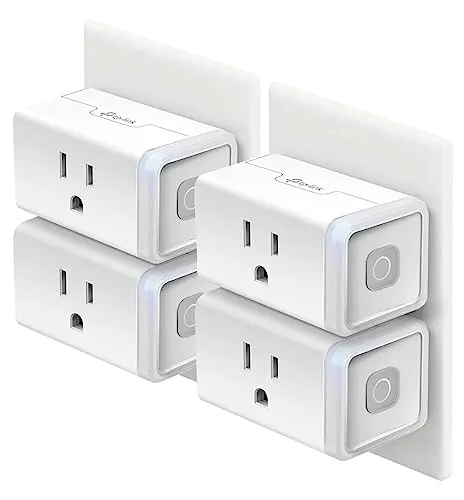
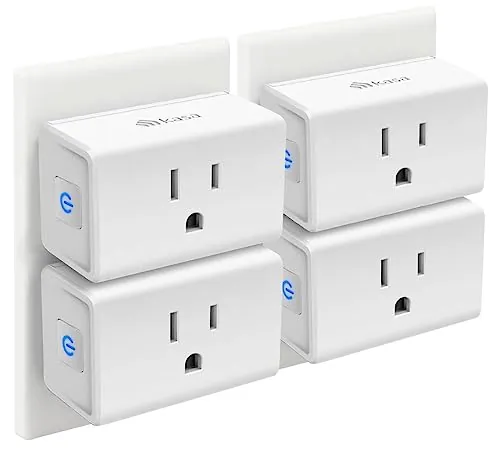
Kasa KL110 and Kasa EP10P4 both add hub-free smart control over 2.4GHz Wi‑Fi, but they solve different problems. The KL110 is a dimmable soft-white smart bulb for mood and brightness control, while the EP10P4 is a compact smart plug four-pack for on/off automation of lamps and small appliances. Both get strong ease-of-setup feedback, with some mixed reports about connectivity.
#1 Overall Winner
Contender
Pick the Kasa KL110 if you want dimming and comfortable soft-white lighting controlled by app or voice. Choose the Kasa EP10P4 if you want simple, reliable on/off automation for multiple devices (lamps, fans, holiday lights) with strong scheduling features and a compact plug design. Both are hub-free 2.4GHz Wi‑Fi devices, but both can see occasional connectivity complaints.
Overall winner
Depends on your needs
| Feature | Kasa Smart Light Bulb KL110 (A19 Dimmable, 800lm Soft White 2700K) | Kasa Smart Plug Mini EP10P4 (15A, 4-Pack) | Winner |
|---|---|---|---|
| Product type | Wi‑Fi smart LED light bulb (A19, E26) | Wi‑Fi smart plug mini (on/off) | Depends |
| Primary control | Dimming + on/off | On/off | Kasa Smart Light Bulb KL110 (A19 Dimmable, 800lm Soft White 2700K) |
| Brightness / output | 800 lm, soft white 2700K | N/A (controls connected device) | Kasa Smart Light Bulb KL110 (A19 Dimmable, 800lm Soft White 2700K) |
| Voice assistant support (listed) | Alexa, Google Assistant, Cortana | Alexa, Google Assistant, IFTTT (SmartThings mentioned) | Depends |
| Hub requirement | No hub required | No hub required | Tie |
| Wi‑Fi band requirement | 2.4GHz required | 2.4GHz required | Tie |
| Scheduling / timers | Not clearly specified in provided data | Timers, schedules, countdown, away mode (listed) | Kasa Smart Plug Mini EP10P4 (15A, 4-Pack) |
| App control | Kasa app control for dimming/brightness | Kasa (or Tapo mentioned) for on/off and schedules | Tie |
| Physical fit / outlet blocking | Fits A19 fixtures; depends on lamp/fixture | Ultra-compact; designed not to block second outlet | Kasa Smart Plug Mini EP10P4 (15A, 4-Pack) |
| Safety markings (provided) | Not specified in provided data | UL certified (listed) | Kasa Smart Plug Mini EP10P4 (15A, 4-Pack) |
| Customer feedback themes | Easy setup, smooth dimming; mixed connectivity/brightness perceptions | Easy setup, scheduling/value; mixed connectivity/assistant integration | Depends |
| Best use case | Room lighting mood + brightness control | Automating any plug-in device on/off | Depends |
For everyday home use, the KL110 is about making a room feel right: dim for winding down, brighter for reading or chores, and controlled from the sofa or bed. The EP10P4 is more about making routines automatic: turning devices on/off on a schedule, controlling several items around the home, or remotely power-cycling electronics when needed. If you mainly want smarter lighting, the bulb is the direct solution; if you want smarter outlets for multiple devices, the plug pack is the more versatile household tool.
In kitchens, the EP10P4 is usually the more practical choice because it can automate on/off control for appliances that don’t need variable power (for example, turning a lamp or certain small devices on a schedule). The KL110 can still be useful in kitchen fixtures for warm, dimmable light, but it only helps where you can replace a bulb and where dimming is the priority rather than automating multiple plug-in devices.
For comfort, the KL110 has the clearer advantage because dimming and warm light can materially change how a bedroom or living room feels throughout the day. The EP10P4 can contribute to comfort indirectly by automating devices like fans or humidifiers (on/off only, as listed), but it won’t adjust brightness or device intensity. If “atmosphere” is the goal, the smart bulb is the more direct comfort upgrade.
Performance looks strong for both, with each doing its core job well when the Wi‑Fi connection is stable. The KL110’s performance is mainly about dimming smoothness and pleasant soft-white output; reviews frequently praise the light quality and fine-grained dimming with minimal fuss once installed. The EP10P4’s performance centers on dependable on/off control and scheduling, and many reviews describe it as a “set it and forget it” tool for routines and remote control. The main performance caveat for both is mixed connectivity feedback—some households report occasional dropouts or assistant hiccups.
Reliability looks good overall for both, supported by high ratings and large numbers of reviews, but neither is flawless. The KL110 has mixed feedback on connectivity and some mixed perceptions of brightness, which can affect day-to-day satisfaction if bulbs frequently drop offline. The EP10P4 also has mixed connectivity/assistant feedback, and one review notes that router changes can require careful reset/re-add steps. In both cases, a stable 2.4GHz Wi‑Fi network and correct setup sequence appear important for consistent operation.
Neither product is a security sensor or camera, but the EP10P4 includes an Away Mode feature in the listing to help simulate occupancy by turning devices on/off. The KL110 can also support occupancy-like lighting patterns through app/assistant routines, but away/automation features are more explicitly positioned on the smart plug side in the provided data.
The EP10P4 has clearer safety information in the provided data: UL certification is listed, it’s designed for a 15A max load, and it mentions flame-retardant materials. Those details matter because smart plugs can be used with a range of devices, so staying within the rated load is important. For the KL110, safety considerations are mostly standard bulb best practices: use in indoor fixtures, ensure compatibility with the socket/voltage, and avoid using wall dimmers unless your setup supports it (a reviewer noted keeping dimmers at full). Neither product’s data suggests frequent overheating issues in reviews provided.
Comfort is where the KL110 most clearly shines: a warm 2700K tone and wide dimming range can support winding down at night, low-level navigation lighting, or bright task lighting without changing bulbs. The EP10P4 supports comfort more indirectly by automating devices (like turning a fan on before bedtime), but it’s still on/off control and depends on what you plug into it. For creating a calmer room atmosphere, the smart bulb is the more direct tool.
Both are widely described as easy to set up through the Kasa app. The EP10P4 is often simpler day-to-day: plug it in, assign it, and you’re controlling whatever is plugged into it. The KL110 is also straightforward, but smart-bulb life requires keeping the wall switch on and using the app/voice for control, which can be a small adjustment for households used to flipping switches.
The EP10P4 has the clearer design win for tight spaces because it’s explicitly designed not to block the second outlet and comes in a four-pack for consistent placement around the home. The KL110 uses a standard A19 shape and E26 base, which is convenient for most lamps and fixtures, but it can’t solve wall-outlet crowding in the same way. Visually, the bulb “disappears” into a lamp, while the plug is always visible on the wall.
Both are space-efficient, but in different ways. The KL110 takes no extra room beyond a normal bulb and is ideal when you don’t want wall clutter. The EP10P4 is compact for a plug-in adapter and is designed not to block the second outlet, which helps in tight outlet locations. For minimal visual impact, the bulb wins; for maximizing usable sockets, the plug’s form factor is the key advantage.
Both are “no tools” installs, but the process differs. The KL110 requires swapping a bulb into a compatible A19/E26 fixture and then pairing through the app; households must also adapt to leaving the physical switch on. The EP10P4 is plug-and-play physically: insert into an outlet, plug your device into it, then pair in the app. In general, the smart plug is the simpler physical installation, especially for renters or for outlets that are easy to access.
Based on provided materials and feedback, the EP10P4 appears a bit more confidence-inspiring physically: it uses a polycarbonate housing and is described as compact and sturdy, with UL certification listed. The KL110 bulb is listed as plastic, and while many buyers describe it as reliable, there’s less in the provided data to validate build robustness beyond general satisfaction. If you expect frequent handling (moving between outlets), the plug’s casing and form factor are a practical advantage.
Long-term durability is hard to confirm from the provided specs alone, but there are some helpful signals. KL110 reviews include users reporting months of daily use without issues and others mentioning long-term use of the brand’s bulbs, though that isn’t a guarantee. EP10P4 durability benefits from a robust housing material description (polycarbonate) and an explicit safety certification, but it’s still an electronics accessory that may see more plugging/unplugging wear over time.
Maintenance is minimal for both. The KL110 doesn’t require cleaning beyond normal lamp care, and day-to-day upkeep is mostly app management (renaming, grouping) and ensuring the wall switch stays on. The EP10P4 similarly needs little physical maintenance, but you may occasionally need to reset/reconnect after network changes or outages. Since the plug pack is often used for scheduling, keeping routines organized in the app can reduce confusion later.
The EP10P4 is more portable in everyday use because you can move it from one outlet/device to another in seconds, which is useful for seasonal lighting or testing automations. The KL110 can be moved too, but it’s tied to a lamp or ceiling fixture and requires physically swapping bulbs. If you expect to re-purpose the device often, the smart plug is the more flexible option.
The KL110’s headline feature is dimming control (from very low to full brightness) plus voice and app control for lighting. The EP10P4’s feature set is broader for automation: timers, schedules, countdown, and away mode are listed, plus IFTTT support is mentioned for integrations. If you want to change the look and feel of a room with adjustable lighting, the bulb wins. If you want to automate many different plug-in devices with rules and schedules, the plug pack offers more smart-home utility.
The Kasa app experience is a strong point for both products in the provided feedback, with users describing it as intuitive and reliable for daily control. For the KL110, the app value is mostly in fine brightness control and grouping. For the EP10P4, the app is central to scheduling and managing multiple plugs. A practical note from reviews: setup can involve briefly connecting your phone to the device’s temporary Wi‑Fi during pairing.
Both fit well in a hub-free smart home: they use Wi‑Fi, work with Alexa and Google Assistant, and are commonly described as easy to set up in the Kasa app. The difference is how they expand your system. The KL110 upgrades one light point with dimming, while the EP10P4 can upgrade multiple outlets at once and is more automation-oriented (timers, schedules, and away mode are listed). If you’re building routines across several devices, the plug pack is often the faster way to scale.
Both products are smart-home friendly without needing a hub, and both pair with common voice assistants. The KL110 is ideal for lighting-based routines (for example, dimming at set times), while the EP10P4 is ideal for outlet-based routines (turning devices on/off on a schedule, grouping multiple plugs, and using away mode as listed). If your smart home plan includes many “non-smart” devices, the plug pack usually expands capabilities faster; if your goal is better lighting control, the bulb is the targeted upgrade.
The EP10P4 is the clear automation leader because timers, schedules, and away mode are explicitly listed and heavily discussed in reviews as the main benefit. The KL110 can still be automated through app/assistant routines, but its standout use is manual or voice-controlled dimming rather than device-like scheduling depth. If you want hands-off routines across multiple items, the smart plug pack is the stronger automation tool.
Connectivity is similar: both require a secured 2.4GHz Wi‑Fi network, and both have generally positive setup experiences but mixed reports about staying connected. Reviews for each product include buyers who say pairing is quick and stable, alongside others who mention dropouts. If your network changes (new router/mesh), expect to potentially reset and re-add devices; one plug reviewer specifically described needing to follow the removal/reset sequence carefully after router changes.
The KL110 is a 9W LED bulb intended to replace a 60W equivalent incandescent, which typically supports lower power use for the same general brightness, but real-world savings depend on usage and dimming habits. The EP10P4 can help reduce waste by enforcing schedules and ensuring devices aren’t left on, and some buyers mention saving on electricity. Neither listing provides detailed energy monitoring data here, so efficiency benefits are mostly about LEDs (bulb) and better control habits (plug).
Both products rely on app control and Wi‑Fi connectivity, which typically implies account/app usage and network access. The provided data doesn’t include detailed information about data handling, local-only modes, or encryption specifics, so it’s best to assume cloud/app dependence for remote control features. If privacy is a priority, consider what permissions the app requests on your phone and use strong Wi‑Fi and account passwords.
Value depends on what you’re buying smart control for. The KL110 can be excellent value when you want a noticeable quality-of-life improvement in a key room through dimming and warm light control. The EP10P4 often delivers stronger overall value for households expanding smart home coverage, because the four-pack can automate multiple devices immediately and scheduling is a core strength. Both products have high buyer ratings, but each has some connectivity complaints—so the best value also depends on having a solid 2.4GHz Wi‑Fi setup.
Both products come from Kasa Smart (TP-Link as manufacturer is listed for both), so brand trust factors are similar. In the provided data, the EP10P4 listing includes more explicit trust signals like UL certification and a stated 2-year warranty, while the KL110 page doesn’t provide comparable warranty detail. Review sentiment for both is broadly positive at scale, which supports general confidence, but doesn’t eliminate the chance of connectivity quirks in some homes.
Both products show strong customer satisfaction with high star ratings and very large review counts. KL110 buyers frequently praise easy setup, smooth dimming, and pleasant soft-white lighting, with mixed feedback on staying connected and whether it feels bright enough in every setup. EP10P4 buyers often praise reliability, compact design, and how useful schedules/timers are, with mixed feedback on connectivity and Alexa compatibility for some users. Overall sentiment favors both, with the smart plug edging ahead for broad, practical usefulness.
Warranty/support detail is clearer for the EP10P4 because the listing states a 2-year warranty. For the KL110, the provided data doesn’t specify warranty length or support terms, so it’s harder to compare support expectations directly. If warranty coverage is important to you, confirm the current warranty terms at purchase for whichever product you choose.
These two Kasa products aren’t direct substitutes: the KL110 is a dimmable smart bulb, and the EP10P4 is a smart plug pack for on/off automation. If you want better lighting comfort, the KL110 is the stronger choice—its main strength is smooth dimming and a soft white tone, while its main limitation is mixed reports on connectivity and perceived brightness in some setups. For broad smart-home practicality, the EP10P4 is the clearer overall winner—its main strength is versatile scheduling and controlling multiple devices at once, while its main limitations are 2.4GHz-only networking and mixed connectivity/assistant feedback for some users. Pick based on whether you’re upgrading a room’s lighting or automating devices around the home.
Overall winner
Depends on your needs
They’re better at different jobs. The Kasa KL110 is the right pick if you want to control brightness (dimming) and set a soft white mood directly from the bulb. The Kasa EP10P4 is better when you want to automate on/off power for lamps, fans, or small appliances, especially with schedules and timers across multiple outlets.
No. Both the Kasa KL110 smart bulb and the Kasa EP10P4 smart plug connect directly to a secured 2.4GHz Wi‑Fi network and use the Kasa app for setup and control. If your home only uses 5GHz Wi‑Fi, you’ll need to enable or provide a 2.4GHz network for either product.
Both are widely described as easy to set up, but the EP10P4 smart plug tends to be the simplest physically because you just plug it in and pair it. The KL110 bulb setup is still straightforward, but it requires installing a bulb in a fixture and keeping the wall switch on for normal smart control.
Both list Alexa and Google Assistant compatibility, and many reviewers report smooth voice control. That said, both products also have some mixed feedback around connectivity or assistant integration. For the most consistent experience, a stable 2.4GHz Wi‑Fi signal and following the reset/pairing steps closely can matter.
The EP10P4 smart plug is the stronger choice if your goal is scheduling and hands-off automation, since timers and schedules are a core part of how people use smart plugs (and it’s frequently praised for this). The KL110 can support lighting routines via app/assistants, but its standout feature is fine-grained dimming for comfort and mood.
The KL110 is space-friendly because it replaces a standard A19 bulb and doesn’t add clutter. The EP10P4 is also compact for a plug-in device and is designed not to block the second outlet, but it still protrudes from the wall. Choose KL110 for minimal visual footprint; choose EP10P4 when you need outlet-based control.
Yes—both listings include mixed feedback about connectivity. Many buyers report fast, reliable setup and stable use, but a noticeable minority mention losing connection or occasional integration hiccups. Because both rely on 2.4GHz Wi‑Fi, network strength, router changes, and correct reset steps can affect day-to-day reliability.
No on/off smart plugs like the EP10P4 are intended for power control rather than dimming, and no dimming capability is listed for it. If you specifically want to adjust brightness, the KL110 smart bulb is the appropriate option because it provides app/voice dimming from very low to full brightness.
If you want to automate multiple devices quickly, the EP10P4 four-pack can deliver more coverage per purchase because each plug can control a different device. If your focus is lighting comfort in one key room (like a bedroom), the KL110 can feel like better value because dimming directly changes how the room feels.
Check our rankings and expert guides to find the best home lifestyle products for your goals.