#1 Overall Winner
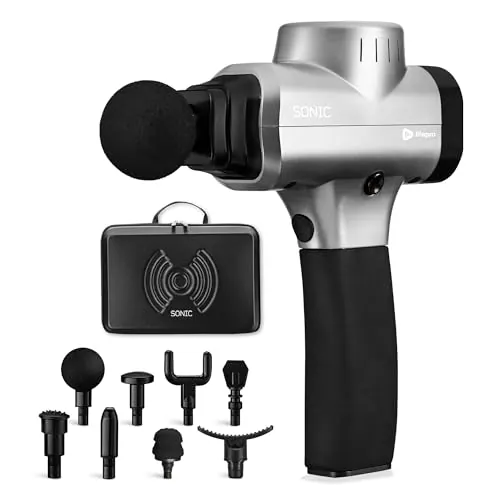
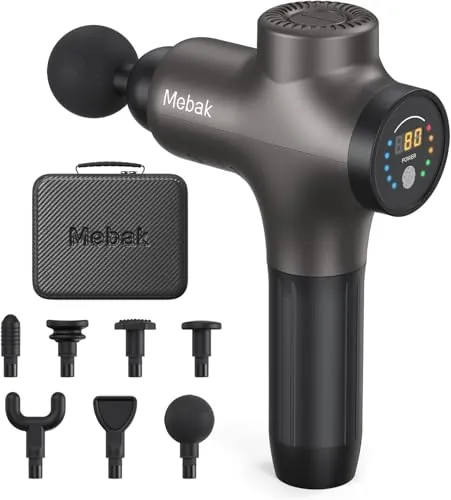
LifePro Sonic Massage Gun (LP-SNK)
- Strong deep-tissue relief reported for sore and tight muscles
Comparison
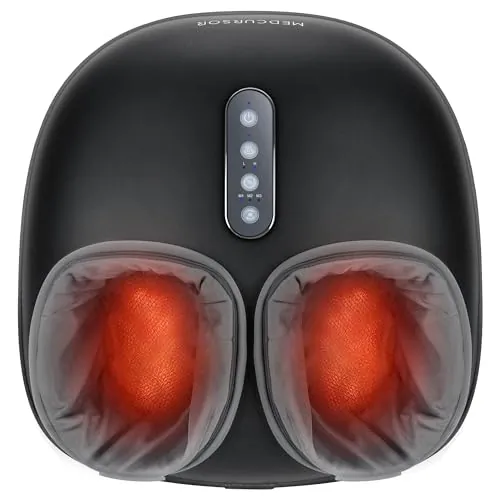
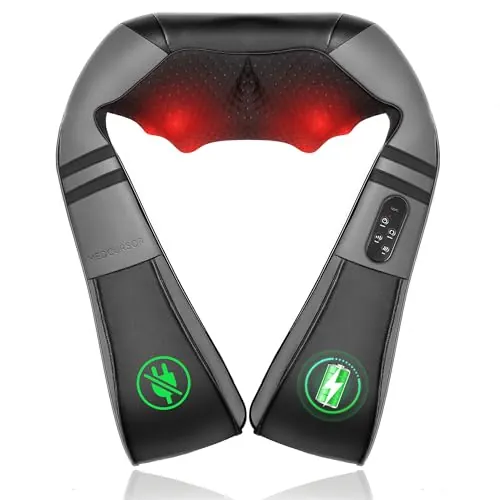
The LifePro Sonic is a cordless percussion massage gun aimed at whole-body muscle recovery, while the Medcursor is a corded shiatsu-style foot massager with kneading, air pressure, and optional heat. If you want one tool for multiple muscle groups and easy travel, LifePro is the more flexible choice. If your main goal is hands-free relief for tired feet and heels, Medcursor is the more targeted option.
#1 Overall Winner
Contender
Choose the LifePro Sonic if you want a cordless, whole-body percussion massager with multiple heads and strong buyer satisfaction. Choose the Medcursor if you mainly want a hands-free foot massager with kneading, air pressure, and optional heat for end-of-day relief. Neither is ideal around moisture, and both can feel intense—starting on lower settings helps.
Overall winner
Depends on your needs
| Feature | LifePro Sonic Massage Gun (LP-SNK) | Medcursor Foot Massager with Heat (MDFM400) | Winner |
|---|---|---|---|
| Product type | Percussion massage gun | Shiatsu foot massager machine | Depends |
| Target area | Whole body | Feet (up to size 13) | Depends |
| Massage technique | Vibration/percussion | Kneading + air pressure (with optional heat) | Depends |
| Heat function | Not listed | Yes (toggleable; preheat recommended) | Medcursor Foot Massager with Heat (MDFM400) |
| Power & portability | Cordless, battery-powered | Corded electric | LifePro Sonic Massage Gun (LP-SNK) |
| Runtime / session style | Up to 6 hours per charge | 15-minute auto shut-off sessions | Depends |
| Ease of use | Handheld with speed control and interchangeable heads | Hands-free foot placement with multi-level settings | Medcursor Foot Massager with Heat (MDFM400) |
| Noise (based on feedback) | Often described as quiet | Not consistently described as quiet; typical mechanical operation | LifePro Sonic Massage Gun (LP-SNK) |
| Comfort for sensitive users | Can be intense on bony areas; adjustable speeds | Pressure can be painful for some; adjustable settings | Tie |
| Cleaning & upkeep | Wipe down attachments and body (not water resistant) | Wipe-clean PU exterior + removable washable sleeve | Medcursor Foot Massager with Heat (MDFM400) |
| Build quality (from data) | Generally praised, but some internal breakage reports | Mixed reports including failures/uneven operation | Tie |
| Customer sentiment | Higher overall buyer satisfaction trend in provided data | Very positive overall, but more mixed on heat and comfort | LifePro Sonic Massage Gun (LP-SNK) |
| Value for money | Strong perceived value for a whole-body tool | Strong perceived value for foot-focused relief | Depends |
For everyday home use, the LifePro fits into quick, flexible recovery sessions—grab it for a few minutes on calves, shoulders, or lower back, then put it away. The Medcursor is more of a “set a routine” appliance: place it near a sofa or desk, run a timed session, and use it as a nightly wind-down tool. If multiple people in the household want to treat different areas, LifePro is easier to share across use cases; if several people mainly want foot relief, Medcursor can be the more convenient station-style option.
Both products are comfort-focused, but in different ways. The LifePro aims at muscle soreness and tightness across the body, which can make it easier to recover after training or physically demanding days. The Medcursor targets foot fatigue and can add a warming sensation (when the heat feature performs well), which many people associate with relaxation before sleep. If your comfort issues are mostly full-body tension, LifePro is the more relevant tool; if your discomfort centers on tired feet and heels, Medcursor fits better.
In terms of core massage effectiveness, the LifePro Sonic appears stronger and more consistently satisfying for deep-tissue muscle relief, with many reviews calling out noticeable soreness reduction and tight-muscle loosening. The Medcursor also performs well for its intended job—deep kneading on the sole, arch, and heel—especially for people who want a hands-free foot routine. However, Medcursor performance feedback is more mixed around heat output and whether both sides operate consistently. Performance is best matched by body area: whole-body muscle work favors LifePro; foot-specific relief favors Medcursor.
Reliability is the main watch-out for both products, though the patterns differ. For the LifePro, there are reports of units developing abnormal noise/vibration and internal components coming loose, as well as at least one report of a jam that prevented powering on—balanced by accounts of the company authorizing replacements. For the Medcursor, buyers mention occasional early failures, including reports that it may not work on both sides, plus inconsistent heat. If reliability is critical, consider purchase protections and how responsive support appears in recent feedback.
Both products should be used carefully because strong massage can be uncomfortable or aggravating if applied incorrectly. The LifePro can be intense, especially near bony areas, so using lower speeds and avoiding direct pressure on sensitive spots is important. The Medcursor includes a timed auto shut-off, which supports safer set-and-relax sessions, but reviews mention that pressure can feel painful for some users, so starting low matters here too. Neither is water resistant, so both should be kept away from spills and used only in dry environments.
Comfort depends heavily on sensitivity and preferred massage style. Many users find the LifePro effective even on lower settings, but it can feel too intense on bony areas if you press too hard or choose a higher speed. Medcursor comfort reviews are more split: lots of people find it deeply relaxing, while others describe it as painful, especially at stronger pressure. If you’re sensitive, both products are best approached by starting on the lowest intensity and increasing gradually.
Both are straightforward, but they feel different to use. The Medcursor is largely hands-free—set your feet in place, choose a level, and let the timer handle the session end. The LifePro is intuitive but manual: you hold it, select a speed, and guide it to the right angle and pressure, swapping heads when needed. If you prefer minimal effort while sitting, Medcursor is easier; if you want control over exact placement on the body, LifePro is more adaptable.
The LifePro has a compact handheld shape designed for grip and targeting, and it’s easy to store thanks to its travel case. The Medcursor is a larger countertop/floor-style unit built to keep your feet positioned for kneading and compression, which makes it less flexible to move around during use. If you want something that can live in a drawer or gym bag, LifePro’s design fits better. If you want a device you can slide under a desk for foot sessions, Medcursor’s form factor makes sense.
“Capacity” means different things here. The LifePro is rated for whole-body use and comes with multiple heads, so its practical capacity is the range of muscle groups it can address. The Medcursor has a clear size limit—fits feet up to size 13—and targets specific zones (sole, arch, heel) rather than the whole body. For multi-user households with different needs, LifePro’s broader use range is the bigger “capacity” advantage, while Medcursor is sized around foot fit.
LifePro is easier to tuck away because it’s a handheld tool with a compact storage case, making it better for smaller flats, shared bedrooms, or minimal counter/floor clutter. The Medcursor takes more dedicated space since it’s a foot machine designed to sit on the floor or under a desk, and you’ll also want it near a socket. If you’re short on storage, LifePro is the more space-efficient pick; if you can dedicate a corner for a routine, Medcursor works well.
Noise is a clearer win for the LifePro based on the provided feedback, where quiet operation is repeatedly highlighted. The Medcursor doesn’t have strong “quiet” consensus in the data and is a mechanical kneading/compression device, which typically produces audible operation during a session. If you plan to use a massager while others are sleeping or while watching TV at low volume, the LifePro is more likely to be the less disruptive option.
Build quality looks similar overall, with a mix of praise and a few red flags for each. LifePro gets positive feedback for feeling solid and well made, but some reviews describe internal issues over time (for example, abnormal noise/vibration linked to housing/mounting problems). Medcursor’s feedback includes reports of early failures or one side not working for some users. Neither is water resistant, so both depend on careful handling and storage to reduce wear.
Long-term durability looks “good but not flawless” for both. LifePro’s durability concerns are more mechanical (internal housing/mounting and component stability over time), even when overall performance is loved. Medcursor durability concerns show up as uneven function or early failure reports in aggregated feedback. Since neither is water resistant, avoiding moisture and storing them carefully can help. If you want a device that travels often, LifePro’s portability is a plus, but it also means it may take more knocks over time.
Maintenance is manageable for both, but Medcursor has a clearer cleaning routine. LifePro maintenance is mostly wiping down the device and attachments and keeping charging habits consistent. Medcursor can be wiped clean on the exterior, and it includes a removable zippered foot sleeve that can be taken off and washed, which is helpful for shared household use. Neither product lists water resistance, so maintenance should avoid running water over the device and focus on damp-cloth cleaning and keeping the units dry.
The LifePro is the more portable choice: it’s cordless, intended for travel, and includes a case, making it easy to use in different rooms, at the gym, or on trips. The Medcursor is portable in the sense that you can move it, but it’s larger, heavier, and tethered to an outlet, which limits spontaneous use around the home. If you want to massage on the sofa one day and in a hotel the next, LifePro is the practical option.
LifePro’s features center on versatility: multiple interchangeable massage heads and variable speeds in a cordless handheld format. Medcursor’s feature set is more “session-based,” combining kneading massage with air pressure options and a heat mode, plus an auto shut-off timer. If you want one tool that can switch from calves to shoulders to back, LifePro’s attachments are the standout. If you want a device that runs a consistent, timed foot routine with optional heat, Medcursor’s built-in modes are the advantage.
The LifePro is efficient for quick, targeted sessions and doesn’t require a fixed setup location thanks to its battery power and long runtime between charges. The Medcursor can be efficient for daily routines because you can run a predictable timed session, but it’s corded and may take some preheating time if you want stronger warmth. Neither product includes verified energy-use details in the provided data, so “efficiency” mainly comes down to how quickly you can get relief in your preferred routine.
Value leans slightly toward the LifePro if you want one massager to cover multiple body areas. At its price, buyers frequently describe it as well worth it, highlighting strong relief, quiet use, long runtime, and multiple heads. The Medcursor also earns “worth the price” feedback, particularly for people who primarily need foot relief and want features like kneading, air pressure, and optional heat. The main value risk for Medcursor is mixed heat performance and occasional functional issues; for LifePro, it’s durability over time.
Brand trust is stronger for LifePro in the provided data, largely because buyer feedback includes detailed mentions of responsive support and replacements after issues. Medcursor is widely purchased and generally liked, but the provided information doesn’t include the same level of support/warranty confidence, and warranty/support sentiment appears less robust. If after-sales help is a key buying factor, LifePro has the clearer evidence in the supplied reviews.
Both products are well rated with high review volume, but LifePro’s sentiment is more consistently positive around the “core experience”: deep relief, quiet operation, long battery life, and value. Medcursor has many enthusiastic reviews describing strong relaxation and foot pain relief, but it also shows more split feedback on comfort (too painful for some), heat effectiveness (some can’t feel it), and occasional uneven performance. If you’re risk-averse and want fewer mixed themes, LifePro has the steadier satisfaction pattern in the provided data.
LifePro has stronger warranty/support signals in the provided reviews, including accounts of quick authorization and replacement when a unit failed. For Medcursor, the provided data does not include comparable support experiences, and the available scoring context suggests weaker warranty/support confidence. If support is a deciding factor, LifePro has clearer evidence of follow-through when something goes wrong.
Overall, the better all-around choice is the LifePro Sonic massage gun for most households, because it’s versatile across the body, easy to use, travel-friendly, and consistently praised for deep relief, quiet operation, and value. Its main drawback is that a minority of reviews raise durability concerns over time.
The Medcursor foot massager is the better specialist pick if you specifically want hands-free foot kneading with air pressure and optional heat. Many users love it for end-of-day relaxation, but the biggest limitations are mixed heat effectiveness and some reports of uneven operation or pressure being painful. If your need is feet-first comfort, it can still be a strong fit.

Overall winner
Depends on your needs
It depends on what you want to treat. The LifePro is designed for whole-body use with multiple heads, so it can target backs, shoulders, legs, and more. The Medcursor is a dedicated foot massager that focuses on the sole, arch, and heel with kneading, air pressure, and optional heat. Choose based on whether you want full-body flexibility or hands-free foot sessions.
The Medcursor is purpose-built for feet and is commonly used for heel and arch soreness, with reviews mentioning relief for plantar discomfort and circulation. The LifePro massage gun can still be used on feet and calves (one review mentions plantar fasciitis benefit), but it’s a manual tool you’ll need to position carefully. If your main issue is feet, Medcursor is usually the more direct fit.
The Medcursor can be simpler for routine use because you place your feet in, pick a setting, and let it run with an auto shut-off timer. The LifePro is also straightforward, but it requires you to hold the device, swap heads as needed, and guide it over the area you’re treating. If you want hands-free use while sitting, Medcursor tends to feel easier.
Buyer feedback frequently describes the LifePro massage gun as quiet, especially for a percussion tool. The Medcursor is a mechanical kneading device with air pressure, and while many people enjoy it, it’s not typically framed as “quiet” in the same way. If low-noise use in the evening is a priority, the LifePro has the clearer advantage from the provided feedback.
Reviews are mixed. Some users say the heat feels good and warm enough, while others report they can’t feel heat through to their feet. The product guidance also suggests turning on heat 5–10 minutes before use and restarting for best results. If heat is essential for you, it’s worth being aware that experiences vary.
Many owners are very happy with performance and value, but there are some durability concerns in the reviews. One detailed review describes a unit becoming louder and vibrating abnormally due to internal mounting/housing issues, followed by a replacement being authorized. Overall, it looks effective, but not every long-term experience is flawless, so warranty/support and careful use matter.
Both are fairly compact, but they suit small spaces differently. The LifePro stores easily (and includes a travel case) and doesn’t need to stay near an outlet during use. The Medcursor has a larger footprint and needs a power socket nearby, but it can live under a desk or near a sofa for a consistent routine. If you want easy storage, the LifePro is typically simpler.
Both are generally viewed as worth the price in buyer feedback. The LifePro tends to deliver broader value because it can be used on many body areas and includes multiple heads with long cordless runtime. The Medcursor can be strong value if you specifically want a dedicated foot machine with kneading, air pressure, and heat. Value depends on whether you’ll use full-body massage or mostly feet.
Check our rankings and expert guides to find the best home lifestyle products for your goals.