#1 Overall Winner
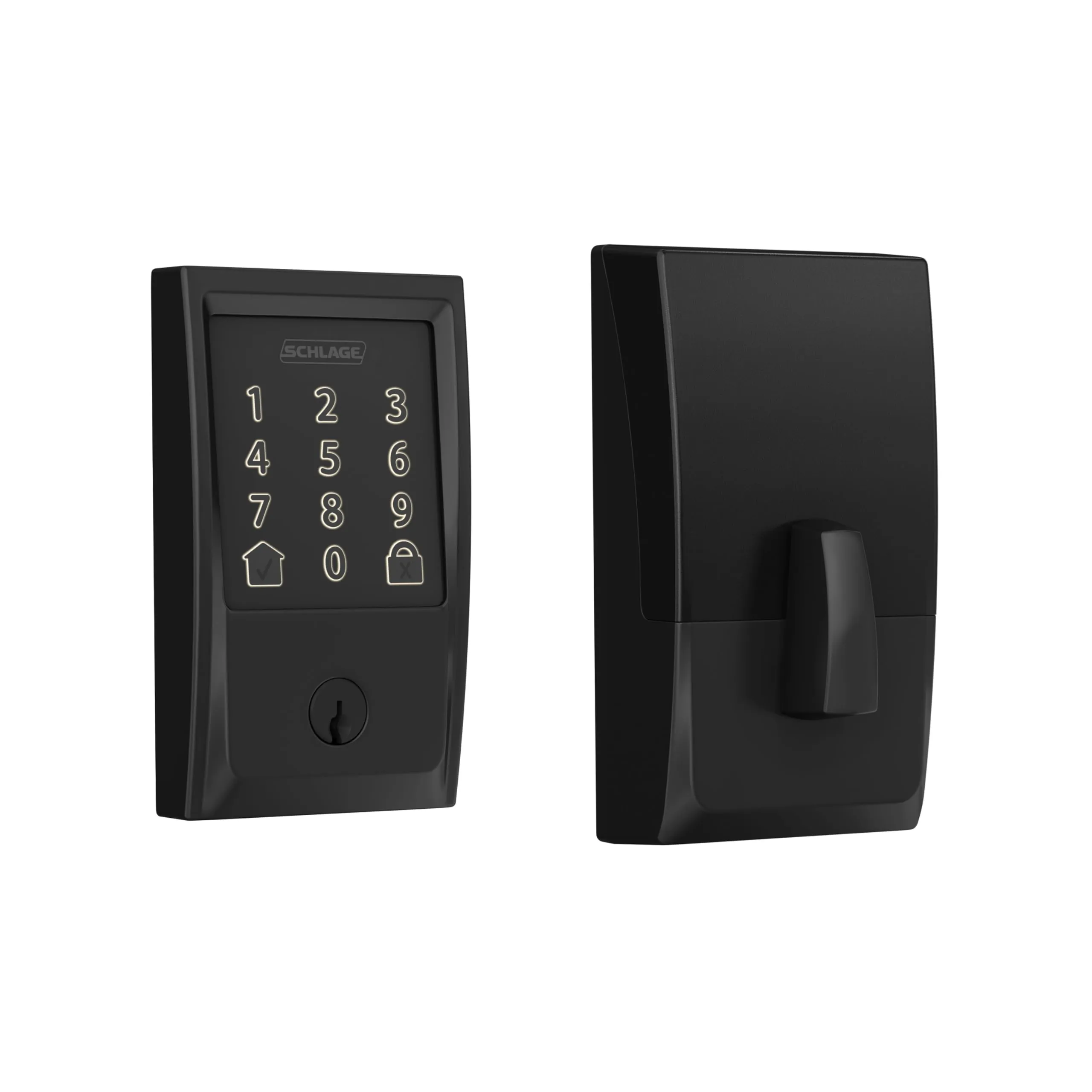
Schlage Encode Smart Wi-Fi Deadbolt Lock with Touchscreen Keypad (BE489WB CEN 622)
- Built-in Wi-Fi for remote control without an extra hub, using the Schlage Home app.
Comparison
The Schlage Encode is a Wi-Fi smart deadbolt designed for keyless entry, remote locking, and access-code management, while the TP-Link RE315 is a budget Wi-Fi extender built to reduce dead zones and improve coverage. If your priority is front-door control (including guest access and alerts), Schlage is the relevant pick; if your main pain point is weak Wi-Fi in parts of the home, TP-Link is the more direct fix.
#1 Overall Winner
Contender
Choose the Schlage Encode if you want keyless entry, remote locking, access codes for family or guests, and security alerts at the door. Choose the TP-Link RE315 if your main goal is to eliminate Wi-Fi dead zones cheaply and improve connectivity for devices in a weak-signal room. If your smart lock struggles to stay online, improving Wi-Fi coverage near the door can be a practical first step.
Overall winner
Depends on your needs
| Feature | Schlage Encode Smart Wi-Fi Deadbolt Lock with Touchscreen Keypad (BE489WB CEN 622) | TP-Link AC1200 WiFi Extender (RE315) | Winner |
|---|---|---|---|
| Product type | Wi‑Fi smart deadbolt with touchscreen keypad | Wi‑Fi range extender (AC1200) | Depends |
| Primary job | Keyless entry + remote lock control | Extend Wi‑Fi coverage into weak areas | Depends |
| Remote/app control | Schlage Home app (also mentions Key by Amazon app) | TP-Link Tether app | Tie |
| Voice assistant support | Alexa, Google Home (optional voice control) | Not listed as smart-home compatible | Schlage Encode Smart Wi-Fi Deadbolt Lock with Touchscreen Keypad (BE489WB CEN 622) |
| Smart-home relevance | Smart lock with monitoring alerts and access management | Improves network coverage for devices | Depends |
| Connectivity bands | Wi‑Fi (buyer feedback notes 2.4 GHz) + Bluetooth listed | Dual-band 2.4 GHz/5 GHz | TP-Link AC1200 WiFi Extender (RE315) |
| Security/monitoring features | Built-in alarm options; lock history; notifications | Access control features in app (network management) | Schlage Encode Smart Wi-Fi Deadbolt Lock with Touchscreen Keypad (BE489WB CEN 622) |
| Installation/setup effort | Door hardware install; generally easy but door fit can matter | Plug-in setup; guided app; placement required | Depends |
| Ongoing upkeep | Battery replacement; alignment matters for smooth operation | Minimal upkeep (mostly app/placement) | TP-Link AC1200 WiFi Extender (RE315) |
| Reliability feedback | Mixed: some report failures within months | Mostly positive but some drops/slowdowns reported | TP-Link AC1200 WiFi Extender (RE315) |
| Portability | Not designed to move frequently once installed | Easy to move room-to-room (plug-in) | TP-Link AC1200 WiFi Extender (RE315) |
| Space efficiency | Fits on a door; minimal interior footprint | Wall plug-in; can block adjacent outlets | Tie |
| Best for small spaces | Good if you want smart entry without extra hubs | Designed to cover smaller homes/apartments; easy placement | Depends |
| Value for money | Higher-cost security hardware with advanced features | Low-cost coverage upgrade; high perceived value | TP-Link AC1200 WiFi Extender (RE315) |
In everyday home use, these products solve different frustrations. Schlage Encode reduces key handoffs and “did we lock the door?” uncertainty by enabling keypad entry, remote locking, and notifications. TP-Link RE315 helps stabilize internet use across the home by extending coverage into weak rooms, which can improve streaming, working from home, and connectivity for Wi-Fi devices placed far from the router.
Schlage Encode’s core performance is about dependable locking/unlocking and remote access management, and it’s often praised for responsive app control and practical features like auto-lock and one-touch locking. However, reviews and summaries also show performance can be inconsistent across homes due to disconnections, battery drain, or units that stop working early.
TP-Link RE315’s performance is about extending coverage and improving signal reliability. Buyer feedback is generally positive for expanding usable Wi-Fi into dead zones, with the usual extender caveat: results depend heavily on placement and the quality of the main router’s signal where the extender sits.
Reliability is the biggest deciding factor between these two. Schlage Encode has strong functionality on paper and many happy owners, but the provided review summary includes recurring concerns: disconnections for some users, battery drain complaints, and reports of locks failing after a few months in some cases. That kind of failure is more disruptive because it affects door access.
TP-Link RE315 reviews are generally positive, with some reports of drops or slowdowns depending on setup and placement, plus occasional issues in access point mode. When it misbehaves, the impact is usually limited to network performance rather than physical access.
For security and monitoring, Schlage Encode is the clearly relevant product: it’s designed for door access control with features like lock history, customizable notifications, and a built-in alarm option for door movement or forced entry attempts. TP-Link RE315 can indirectly support a security setup by improving Wi-Fi coverage for devices (such as cameras) in weak-signal areas, but it does not provide door monitoring or access control by itself.
Schlage Encode is built for entry monitoring: it supports viewing lock history, receiving notifications, and using a built-in alarm option for door movement or forced entry attempts. This is useful for knowing when the door is used and for adding an extra layer of awareness. TP-Link RE315 does not provide security monitoring functions, but it can help security devices stay online by improving Wi-Fi coverage in weak areas—an indirect benefit rather than a monitoring feature.
Schlage Encode safety considerations are mostly about secure entry and avoiding lockouts. It includes a physical key backup and low-battery indicators, which can reduce the risk of getting stuck outside, but reviews suggest battery life can vary, so proactive replacement is sensible. Proper installation and door alignment also matter so the bolt doesn’t bind, which can lead to inconsistent operation.
TP-Link RE315 is a plug-in electrical device; the main safety consideration is practical placement—using an appropriate outlet and avoiding strain on crowded power strips. No specific hazard patterns are indicated in the provided review summaries for either product.
Comfort here means day-to-day convenience. Schlage Encode can reduce stress around keys and locking up by offering keypad entry, auto-lock options, and the ability to lock/unlock from bed or when away. TP-Link RE315 improves “digital comfort” by making Wi-Fi more dependable in the rooms where you actually use it—home offices, upstairs bedrooms, garages, or basements—so streaming and work sessions are less likely to be interrupted.
TP-Link RE315 is typically the simpler day-one experience: plug it in, follow the Tether app steps, and adjust placement using the signal indicator. Schlage Encode is also commonly described as easy to install and program, but it has more variables—door alignment, retrofit compatibility, and ongoing battery management. If you prefer a “plug-in and reposition” device, TP-Link is generally easier.
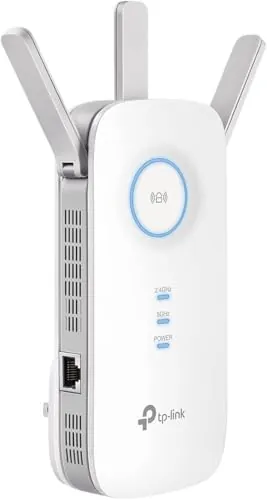
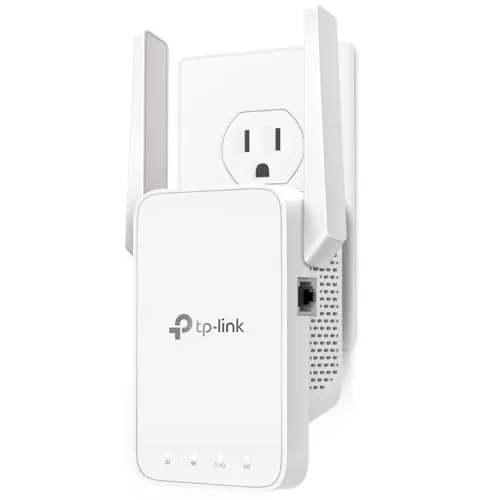
Schlage Encode’s design is about door aesthetics and usability: a touchscreen keypad outside and a deadbolt assembly inside, available here in a matte black finish. It’s visually prominent but purpose-built for entryways. TP-Link RE315 has a compact wall-plug form with adjustable antennas and indicator lights that help with placement; some users note it can block adjacent sockets depending on the outlet layout.
Capacity applies differently here. Schlage Encode’s “capacity” is about access management: it supports managing many access codes through the app for families, guests, or service visits. TP-Link RE315’s capacity is about network reach and device load, with product-stated coverage up to 1500 sq. ft and support for multiple devices. Your best fit depends on whether you need more codes and user management or more Wi-Fi coverage area.
Schlage Encode uses door space rather than floor or counter space, which is efficient in most homes once installed. TP-Link RE315 is also compact, but it consumes a wall outlet and may interfere with adjacent sockets on some outlet layouts. For small flats with limited outlets, placement planning matters for the extender; for the lock, the main “space” consideration is compatibility with your existing door prep and hardware layout.
Neither product is typically a noise source in the home. Schlage Encode is a door lock and operates briefly during locking/unlocking, while TP-Link RE315 is silent networking equipment. If you’re placing either in a bedroom or office, noise is unlikely to be a deciding factor based on the provided information.
TP-Link RE315 installation is usually the faster of the two: plug it into an outlet, follow the Tether app prompts, then choose the best location using the signal indicator. Schlage Encode is still DIY-friendly for many people, using a screwdriver and no hardwiring, and the Snap ‘n Stay design is meant to simplify the process. However, real-world door variations can create issues, and some users report retrofit or thickness-related fit challenges.
Schlage Encode is a physical security device with a zinc construction listed, and many buyers describe it as excellent quality, though some report units breaking within months. TP-Link RE315 is a lightweight plug-in extender; buyer feedback often calls the design clean and the device reliable, but build quality expectations are different for networking hardware at this price. If you prioritize robust door hardware feel, Schlage is the more substantial product.
Schlage Encode’s durability feedback is mixed: while many buyers describe solid quality, some report units breaking within six months or stopping after a short period. Because it’s frequently handled hardware on an exterior door, long-term durability matters. TP-Link RE315 is a lightweight indoor plug-in device; durability concerns are more about long-term stability than physical wear. Based on the provided summaries, TP-Link shows fewer severe durability complaints.
Schlage Encode requires ongoing battery management (four AA batteries) and occasional attention to door/bolt alignment to avoid binding, which can affect smooth operation and battery life. App updates and code management are also part of ownership. TP-Link RE315 maintenance is typically minimal: if performance dips, you may need to reposition it, reboot it, or adjust settings in the Tether app. There are no batteries to replace, and the Ethernet port can reduce wireless instability for a single device.
TP-Link RE315 is far more portable: you can move it between rooms, try different outlets, and reposition it as your needs change. Schlage Encode is installed into a specific door and is not meant for frequent relocation. If you anticipate reconfiguring your home setup (new office, rearranged router placement, seasonal outdoor camera use), the extender is the flexible option.
Schlage Encode focuses on access and security features: touchscreen keypad entry, many user codes, remote lock/unlock, lock history, notifications, auto-lock options, and a built-in alarm setting. It also supports voice control with Alexa and Google Home when paired with the right setup.
TP-Link RE315 focuses on network features: dual-band extension, a signal indicator to help place it, OneMesh/EasyMesh-style expansion with compatible routers, access point mode, and a single Ethernet port for wiring a device in a weak-signal area.
Schlage Home is central to Encode’s experience: remote lock/unlock, access code management, lock history, and notifications are all app-driven, and many reviews describe it as user-friendly and responsive. TP-Link’s Tether app is frequently described as straightforward and helpful for setup, configuration, and basic access control. Both apps are generally well-liked, but each depends on stable network conditions to avoid frustration.
Schlage Encode is a smart-home endpoint: it adds connected entry control, notifications, and voice assistant compatibility (Alexa/Google Home) when paired correctly. TP-Link RE315 isn’t a smart-home automation product, but it can be an important “support” device by strengthening Wi-Fi where smart devices struggle (for example, near exterior doors or garages). If you’re building a reliable smart home, stable Wi-Fi coverage is often a practical prerequisite.
Schlage Encode fits directly into a smart-home routine by enabling app-based control and optional voice control with Alexa and Google Home. It’s also positioned as useful for managing guests via access codes. TP-Link RE315 does not add smart-home automations by itself, but it can strengthen the network foundation that smart devices depend on. If your smart-home problems are actually Wi-Fi problems, an extender can be the more effective “upgrade.”
Schlage Encode offers practical automations such as auto-lock with selectable delay options and one-touch locking, which can reduce “forgot to lock” moments. TP-Link RE315’s automation is more network-oriented, such as adapting to stronger paths/signals and supporting mesh-style expansion with compatible routers. If you want entry-related automation, Schlage is the clearer fit; if you want hands-off Wi-Fi coverage improvements, TP-Link is the relevant tool.
TP-Link RE315 is purpose-built for connectivity: it extends Wi-Fi on both 2.4 GHz and 5 GHz and can also connect a wired device through its Ethernet port. Schlage Encode relies on your home Wi-Fi for remote access features; buyer feedback notes it connects on 2.4 GHz, and reviews are mixed on long-term connection stability. If your household has marginal Wi-Fi near the door, improving coverage may be important for consistent smart-lock access.
Schlage Encode’s efficiency is mostly about battery runtime, and feedback is mixed: some users report solid battery life while others see frequent replacements, which can also be influenced by door alignment and Wi-Fi conditions. TP-Link RE315 is powered from the wall, so “efficiency” is more about how effectively it improves coverage without adding complexity. As with most extenders, good placement is key to avoiding wasted effort and disappointing throughput.
Schlage Encode involves account/app-based remote access and lock history, which can be privacy-sensitive because it relates to when a door is used. It’s described as using a secure, encrypted connection, but you should still consider who has app access and how you manage codes. TP-Link RE315 supports cloud management in the Tether app, which can also be a privacy consideration for network administration. In both cases, strong account passwords and careful access sharing are practical steps.
TP-Link RE315 is the clearer value play for most households because it’s inexpensive and frequently solves a widespread problem: weak Wi-Fi coverage in specific rooms. Buyers also commonly describe it as “does exactly what it’s supposed to do,” which matters for budget networking gear.
Schlage Encode can still be good value if you specifically need smart entry control, guest codes, and door monitoring features, but its higher price and mixed reports around disconnections, battery drain, and occasional early failures increase the “ownership risk.” Value improves most when the door fit is good and Wi-Fi signal at the door is strong.
Both brands have strong recognition in their categories based on the provided information: Schlage emphasizes long experience in door hardware, while TP-Link is widely used in home networking. In buyer feedback here, both products earn high overall ratings, but the lock shows more polarization due to reliability and battery variability. For peace of mind, the more predictable track record in reviews favors the extender, while the lock’s brand appeal is strongest if you want established door-hardware styling and security focus.
Both products have substantial review volume and strong average ratings, suggesting many buyers are satisfied. Schlage Encode is frequently praised for easy installation, app control, and features like access codes and auto-lock, but it also draws recurring complaints about disconnections, battery drain, and occasional early failure. TP-Link RE315 is often praised for ease of setup, noticeable coverage improvement, and value for money, with the most common negatives being occasional drops or slower-than-expected throughput depending on placement and configuration.
TP-Link RE315 is the clearer overall recommendation for most households because it’s inexpensive, easy to set up, and commonly improves Wi-Fi coverage where it matters. Its main limitation is that performance can vary with placement and some users report drops or slower speeds in certain configurations.
Schlage Encode is the better choice when you specifically need smart door access: keypad entry, remote control, notifications, and guest code management. Its main limitation is inconsistent real-world reliability in the provided feedback, including disconnections, battery drain complaints, and some reports of early failure. If your goal is a dependable smart entry system, strong Wi-Fi at the door and careful installation are key.
Overall winner
Depends on your needs
They solve different problems. Schlage Encode is a Wi-Fi smart deadbolt for keyless entry and remote locking, while TP-Link RE315 is a Wi-Fi extender for improving coverage in weak-signal areas. If your main issue is managing access to a front door (including guest codes), Schlage fits. If your issue is dead zones or unstable Wi-Fi in parts of the home, TP-Link fits.
A Wi-Fi extender can help in some homes if the lock’s location has weak router signal. The Schlage Encode connects to home Wi-Fi for remote features, and reviews mention some disconnection issues for some users. Improving signal strength near the door may reduce dropouts, but results depend on placement and the overall network environment.
Both are commonly described as DIY-friendly, but the TP-Link RE315 is often praised for quick setup and a guided app experience with a signal indicator for placement. Schlage Encode is also frequently described as easy to install with strong instructions, but door fit/retrofit can add complexity for some households.
Schlage Encode is the more directly relevant pick for guest access because it supports managing multiple access codes and remote lock/unlock in the Schlage Home app. TP-Link RE315 can still be useful in rentals if guests complain about weak Wi-Fi in certain rooms, but it won’t manage entry access.
Schlage Encode is described as connecting directly to home Wi-Fi without needing an extra hub for remote access. The TP-Link RE315 works by connecting to an existing router and extending its signal; it doesn’t require a separate hub, but it does require an existing Wi-Fi network to extend.
Both products have some mixed feedback on connection stability. Schlage Encode reviews include reports of frequent disconnections and inconsistent reliability for some units. TP-Link RE315 reviews also mention occasional drops or slow performance in some setups, especially depending on placement and mode (extender vs access point).
TP-Link RE315 is typically seen as strong value because it’s inexpensive and often improves coverage noticeably when placed well. Schlage Encode costs more because it’s a security device with keypad access, remote control, and alarm features. “Better value” depends on whether you’re solving Wi-Fi coverage problems or wanting smart, managed door access.
TP-Link RE315 maintenance is usually light: it’s mainly occasional repositioning and app-based settings, with no routine consumables. Schlage Encode maintenance is more hands-on because it is battery-powered; reviews show battery life varies by setup, and keeping the deadbolt aligned (no binding) can matter for smoother operation and battery performance.
Check our rankings and expert guides to find the best home lifestyle products for your goals.